Tag: Amazon KDP

  • Kdp Low Content Book Ideas That Sell

    Kdp Low Content Book Ideas That Sell

    I remember sitting at my kitchen table two years ago, staring at a pile of bills and wondering if there was any way to make an extra few hundred dollars a month without committing to a second shift at my regular job. That curiosity led me to Amazon KDP (Kindle Direct Publishing). If you’ve been scrolling through YouTube or TikTok, you’ve likely seen people claiming they made millions selling notebooks. Let’s be real: that rarely happens. However, building a steady stream of passive income through low-content books is a very real possibility if you focus on the right niches.

    Low-content books are essentially journals, planners, or logbooks where the interior is repetitive or requires minimal text. The beauty of this model is that once the file is uploaded, Amazon handles the printing, shipping, and customer service. You just design, upload, and monitor your royalties. If you are looking for a beginner friendly way to start an online business, this is one of the lowest barrier-to-entry methods available.

    What does it actually cost to start?

    One of the biggest perks of KDP is the lack of inventory. You aren’t buying 500 units of a notebook and hoping they sell; you only pay when a customer clicks “buy.” This makes it a great alternative vs traditional job models that require heavy upfront capital.

    To get started, your startup costs are incredibly low:

    • Design Software: Canva is the gold standard for beginners. The free version works, but Canva Pro saves hours with its “magic resize” and premium elements.
    • built-in tools like Book Bolt can help you find niches and automate interiors.

    • Research Tools: Helium 10 or Publisher Rocket are great if you want to get serious about keyword data.
    • Internet and Computer: You likely already have these.

    Total initial investment? You can literally start with $0, though spending around $20-$50 on a Canva subscription or basic research tools will significantly speed up your progress.

    How much can you earn with low-content books?

    I get asked how much can you earn every single day. The honest answer is: it depends entirely on your volume and niche selection. You won’t become a millionaire overnight by uploading one notebook. Most successful KDP publishers operate like a digital real estate empire. One book might make $5 a month, but if you have 200 books each making $5, that’s $1,000 in monthly royalties.

    Realistic income ranges look like this:

    • The Hobbyist: 1-10 books. Income: $10 – $100 per month. This covers your coffee habit and maybe a small subscription.
    • The Side Hustler: 50-200 books. Income: $300 – $1,500 per month. This is enough to cover a car payment or groceries.
    • The Pro Publisher: 500+ books in high-demand niches. Income: $3,000+. This requires significant time investment and deep keyword research.

    Profitable low-content book ideas for beginners

    Avoid the “Notebook Trap.” If you just upload a blank lined notebook, you are competing with millions of others. You need to find a specific person with a specific problem. Instead of “Notebook,” think “Daily Fitness Tracker for Busy Moms” or “Fishing Logbook for Bass Enthusiating.”

    Niche 1: Specialized Logbooks

    Logbooks are much more profitable than standard journals because they serve a utility purpose. People buy them to track progress, which creates repeat usage and high value.

    • Blood Pressure/Glucose Trackers: Great for the elderly or those managing health conditions.
    • Garden Planners: For people tracking planting dates, soil types, and harvest yields.
    • Pet Health Records: Helping puppy owners track vaccinations and feeding schedules.

    Niche 2: Hobby-Specific Journals

    Identify a community that spends money on their passion. These enthusiasts are often looking for ways to document their journey.

    Think about birdwatching journals, sourdough bread baking logs, or even scrapbooking organizers. When you target a hobby, your keywords become much more specific and less competitive than generic terms like “journal.”

    Niche 3: Educational Workbooks for Kids

    While this borders on “mid-content,” simple activity books are massive on Amazon. You don’t need to be an educator; you just need a good layout for tracing letters, coloring pages, or simple math problems. These are evergreen because parents are constantly looking for screen-free activities.

    Time investment and the learning curve

    Don’t expect to spend 10 minutes and see results. To do this right, you need to invest time in learning Amazon SEO (Search Engine Optimization). You need to understand how to find “long-tail keywords”—the specific phrases people actually type into the search bar.

    A realistic time commitment for a beginner might look like 5-10 hours per week. This includes:

    1. Keyword research (2 hours)
    2. Interior design/creation (2 hours)
    3. Cover design (1 hour)
    4. Uploading and metadata optimization (1 hour)

    Common mistakes to avoid

    The biggest mistake I see is “keyword stuffing.” Don’t just cram every possible word into your title. Amazon’s algorithm is smart, and if your title looks like spam, they will reject your book or shadow-ban it from search results. Your title should be readable and human-centric.

    Another pitfall is ignoring the cover. You can have the most amazing interior in the world, but if the cover looks amateurish, nobody will click. Treat your cover like a billboard. It needs to stop the scroll.

    Ready to start your publishing journey?

    The best way to learn KDP is by doing. Don’t wait until you have mastered every design tool or found the “perfect” niche. Pick one simple idea—perhaps a themed gratitude journal—and try to get it live on Amazon this week. The lessons you learn from your first upload are worth more than any course you could buy.

    If you’re ready to take the first step, grab a free Canva account and start browsing Pinterest for cover inspiration today!

  • How To Create And Sell Puzzle Books On Amazon

    How To Create And Sell Puzzle Books On Amazon

    You know that feeling when you finish a difficult Sudoku or a word search and feel a tiny burst of accomplishment? Now, imagine getting paid by people all over the world to provide those little moments of satisfaction. Selling puzzle books on Amazon KDP (Kindle Direct Publishing) isn’t about being a genius mathematician or a master linguist. It is about understanding a specific niche, creating high-quality content, and letting Amazon handle the printing, shipping, and customer service.

    I remember sitting at my desk wondering if this was actually a viable business or just another internet myth. After spending months testing different niches, I realized the real secret isn’t just making puzzles; it’s about making puzzles for a specific person. Whether it’s “Large Print Sudoku for Seniors” or “Spooky Themed Word Searches for Teens,” the money is in the details.

    The Low-Barrier Entry: Understanding the Business Model

    Amazon KDP is a print-on-demand service. This means you don’t need a warehouse full of books or a massive upfront investment. When a customer clicks “buy,” Amazon prints the book, ships it, and sends you a royalty. This significantly lowers your startup cost compared to traditional retail ventures.

    Let’s talk numbers. If you are comparing this vs traditional job, the math looks a bit different. You won’t get a steady paycheck every Friday, but you are building an asset that can earn money while you sleep. A beginner might see anywhere from $50 to $500 in monthly royalties once they have a small library of 10-20 high-quality books. Once you scale to 100+ books, some creators report monthly earnings in the thousands, though that requires significant time and research.

    What you will need to get started

    • A computer with internet access.
    • A niche research tool (like Helium 10 or Publisher Rocket).
    • Puzzle creation software (like Puzzle Wiz or Book Bolt).
    • none

    • A Canva account for cover design.
    • A small budget for advertising (optional but recommended).

    Step 1: Finding Your Profitable Niche

    Most people fail because they create a “General Puzzle Book.” If you search Amazon for “Puzzle Book,” you will see millions of results. You cannot compete with the giants who have been doing this for years. Instead, you need to find a “micro-niche.”

    Look for intersections. Instead of just “Word Search,” think “Word Search for Ocean Lovers” or “Cryptograms for History Buffs.” Use the Amazon search bar to see what people are actually typing. If you see auto-complete suggestions like “Sudoku for beginners with large print,” you’ve found a potential goldmine. The goal is to find a topic with high demand but low, high-quality competition.

    How to validate your idea

    Before you spend even an hour making a puzzle, check the BSR (Best Sellers Rank) of similar books on Amazon. If the top books in your niche have a BSR under 200,000, there is enough active movement to suggest a healthy demand. If the BSRs are in the millions, the niche is likely too dead to bother with.

    Step 2: Creating the Interior Content

    You don’t need to manually draw every grid. There are several tools designed specifically for this. Book Bolt is a favorite among many because it handles both the puzzle generation and the layout design in one platform. If you prefer a more manual, artistic approach, you can use Canva to layout your pages, though you’ll need to source your puzzles from elsewhere.

    Quality control is vital here. There is nothing a customer hates more than a word search where the words don’t actually exist in the grid, or a Sudoku with an error. Always, always, always test your puzzles yourself before uploading them. A single bad review about a broken puzzle can kill your book’s momentum instantly.

    Time investment vs. Complexity

    A simple word search book might take you 10 to 15 hours to research, create, and format. A complex logic puzzle book might take 40 hours or more. While the complex book takes longer, it often has a higher ROI because it is harder for competitors to replicate your work.

    Step 3: Designing a Clickable Cover

    On Amazon, people absolutely do judge a book by its cover. Your cover is your primary marketing tool. It needs to look professional, clearly communicate what is inside, and stand out in a sea of thumbnails. If your cover looks like it was made in MS Paint, customers will skip right over it.

    Use Canva to create your cover. Focus on high-contrast colors and legible fonts. If your book is for seniors, make sure the title is massive and easy to read. Avoid cluttered designs; sometimes a clean, bold aesthetic performs much better than a busy, colorful one.

    Step 4: Uploading and Optimization

    The final step is the technical part: uploading to KDP. This is where your SEO (Search Engine Optimization) happens. You will be asked for a title, subtitle, and seven backend keywords. Do not just repeat your title in your keywords. Instead, use those seven slots to capture different search terms.

    If your title is “Ocean Word Search,” your keywords should include terms like “sea life activity book,” “gifts for marine biologists,” or “large print relaxation puzzles.” This helps Amazon’s algorithm understand exactly who should see your book in their search results.

    Common pitfalls to avoid

    • Keyword Stuffing: Don’t make your title a long string of random words. It looks spammy and Amazon can reject it.
    • Ignoring the Spine: If your book is thin, don’t try to put text on the spine. It will likely end up off-center and look unprofessional.
    • Ignoring Margins: Ensure your puzzles aren’t too close to the “gutter” (the middle crease). If they are, customers won’t be able to read them easily.

    Is it worth the effort?

    Building a puzzle book empire is a marathon, not a sprint. You won’t get rich overnight, and your first three books might not sell a single copy. However, the beauty of this model is that every book you publish is a new “employee” working for you 24/7. Over time, as your library grows, you create a compounding effect of passive income.

    If you are looking for a way to supplement your income without the massive overhead of a physical store, this is one of the most accessible paths available. The cost is low, the risk is minimal, and the ceiling for growth is entirely up to you.

    Ready to start your first book? Pick a niche you are interested in today, grab a tool like Book Bolt, and commit to finishing just one interior. The hardest part is simply starting.

  • Best Niches For Kdp Puzzle Books In 2026

    Best Niches For Kdp Puzzle Books In 2026


    If you’ve been hanging around the KDP community for a while, you know the old advice: “Just make a generic word search and upload it.” We both know that doesn’t work anymore. The Amazon marketplace is way too crowded for generic content. As we look toward 2026, the strategy has to shift from volume to specificity. You can’t just throw spaghetti at the wall; you need to find the pockets of demand where people are actually looking to spend money.

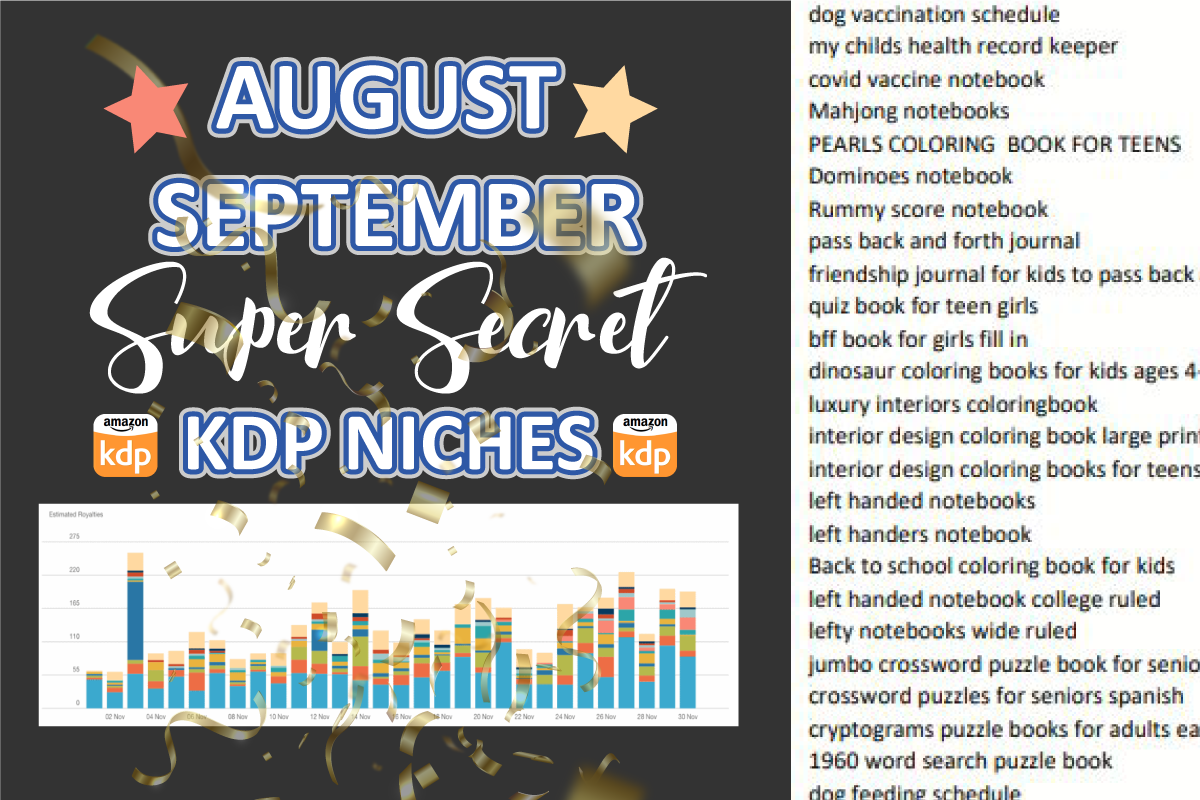
    August September Secret Kdp Niches by Elimesherstudio | Creative Market

    I’ve spent a lot of time analyzing trends in low-content publishing, and the most successful creators are moving away from “all ages” books and toward hyper-niche hobbyist groups. This isn’t about finding a gold mine; it’s about finding a small, dedicated stream of customers that others are overlooking. If you are looking for a beginner friendly way to start a side hustle, puzzle books are still one of the best entry points because the production barrier is so low.

    The Landscape of KDP in 202 and Beyond

    The competition is higher than it was three years ago, but the quality of tools available to us has skyrocketed. We aren’t just manually typing out words anymore. With the rise of AI-assisted design and specialized puzzle generators, the “work” has shifted from creation to curation and research. To see a real ROI, you have to treat your KDP account like a real publishing house, not a hobby.

    When comparing this to a traditional job, the upside is the scalability. You don’t trade hours for dollars in the same way. Once a book is live, it stays live. However, the downside is the lack of a guaranteed paycheck. You need a strategy that focuses on evergreen niches—topics that people will still be searching for in 2027, 2028, and beyond.

    Top Profitable Puzzle Niches for 2026

    Finding the right niche requires a balance of high demand and manageable competition. Here are the areas I’m watching closely for the upcoming year.

    Hyper-Specific Hobbyist Word Searches

    Generic word searches are dead. Instead, think about specific sub-cultures. We are talking about “Succulent Care Enthusiasts,” “Vintage Sewing Machine Collectors,” or “Amateur Beekeeping.” These people have deep passions and love seeing their interests reflected in physical media. When you target a hobby, your Amazon Advertising (AMS) becomes much cheaper because your keywords are so specific.

    Neurodivergent-Friendly Activity Books

    There is a massive, underserved market for puzzles designed specifically for ADHD or Autistic brains. This means puzzles with clear instructions, high-contrast layouts, and perhaps “dopamine-friendly” reward systems (like progress trackers within the book). This requires more design effort, but the loyalty of this audience is incredibly high.

    The “Senior Brain Health” Segment

    As the global population ages, the demand for cognitive stimulation is skyrocketing. However, don’t just make a “Large Print Sudoku.” Make “Sudoku for Gardeners” or “Logic Puzzles for History Buffs.” The goal is to combine cognitive difficulty with a comforting, familiar theme. This niche is less about the puzzle itself and more about the aesthetic and accessibility of the book.

    Nostalgia-Driven Cryptograms

    Nostalgia is a powerful buying trigger. Puzzles that use themes from the 1970s, 80s, or 90s—ranging from retro pop culture to vintage advertisements—are gold mines. People buy these not just to solve them, but as a way to reconnect with a specific era.

    What to Expect: Costs, Time, and Earnings

    Let’s get real about the numbers. I don’t want you to think this is “passive income” that requires zero effort. It is active work that eventually becomes passive.

    • Startup Costs: If you are smart, you can start with under $100. Your main expenses will be a subscription to a tool like Canva Pro for design and perhaps a specialized puzzle generator like Puzzle Wiz or Book Bolt.
    • Time Investment: Expect to spend about 5 to 10 hours per book if you are doing high-quality, themed content. This includes keyword research using tools like Helium 10 or Publisher Rocket, designing the interior, and creating a professional cover.
    • Realistic Income: This varies wildly. A single “hit” book in a great niche can bring in $200–$500 a month. A library of 50 high-quality, niche books can realistically generate $1,000–$3,000 monthly. It is rarely an overnight success.

    Essential Tools for Your 2026 Toolkit

    To compete in 2026, you need to use the right tech. Relying on manual creation is a recipe for burnout.

    1. Research: Publisher Rocket is still the gold standard for finding much-needed keyword data and seeing estimated monthly revenues for competitors.
    2. Creation: Book Bolt is a fantastic all-in-one solution for those who want to manage the entire process from idea to upload.
    3. Design: Canva remains the most accessible tool for cover design, but don’t be afraid to learn the basics of Adobe Express for more complex layouts.
    4. Quality Control: Always use a PDF checker to ensure your margins and bleed settings are correct before uploading to KDP.

    Success in KDP isn’t about being the person who uploads the most books; it’s about being the person who uploads the most valuable books. If you focus on solving a problem—like providing boredom relief for a specific hobbyist—the sales will follow. Stop looking for shortcuts and start looking for niches.

    Are you ready to start your first niche research session? Pick one hobby you know well and see if there is a gap in the current Amazon listings. That is your first step toward building a real publishing brand.

    Our Top Picks

    Products we recommend:

    1. 3000 Best Kdp Coloring Book Niches by Elimesherstudio | Creative Market

    3000 Best Kdp Coloring Book Niches by Elimesherstudio | Creative Market

    3000 Best Kdp Coloring Book Niches by Elimesherstudio | Creative Market

    by Creative Market

    $11.00

    Check Price →

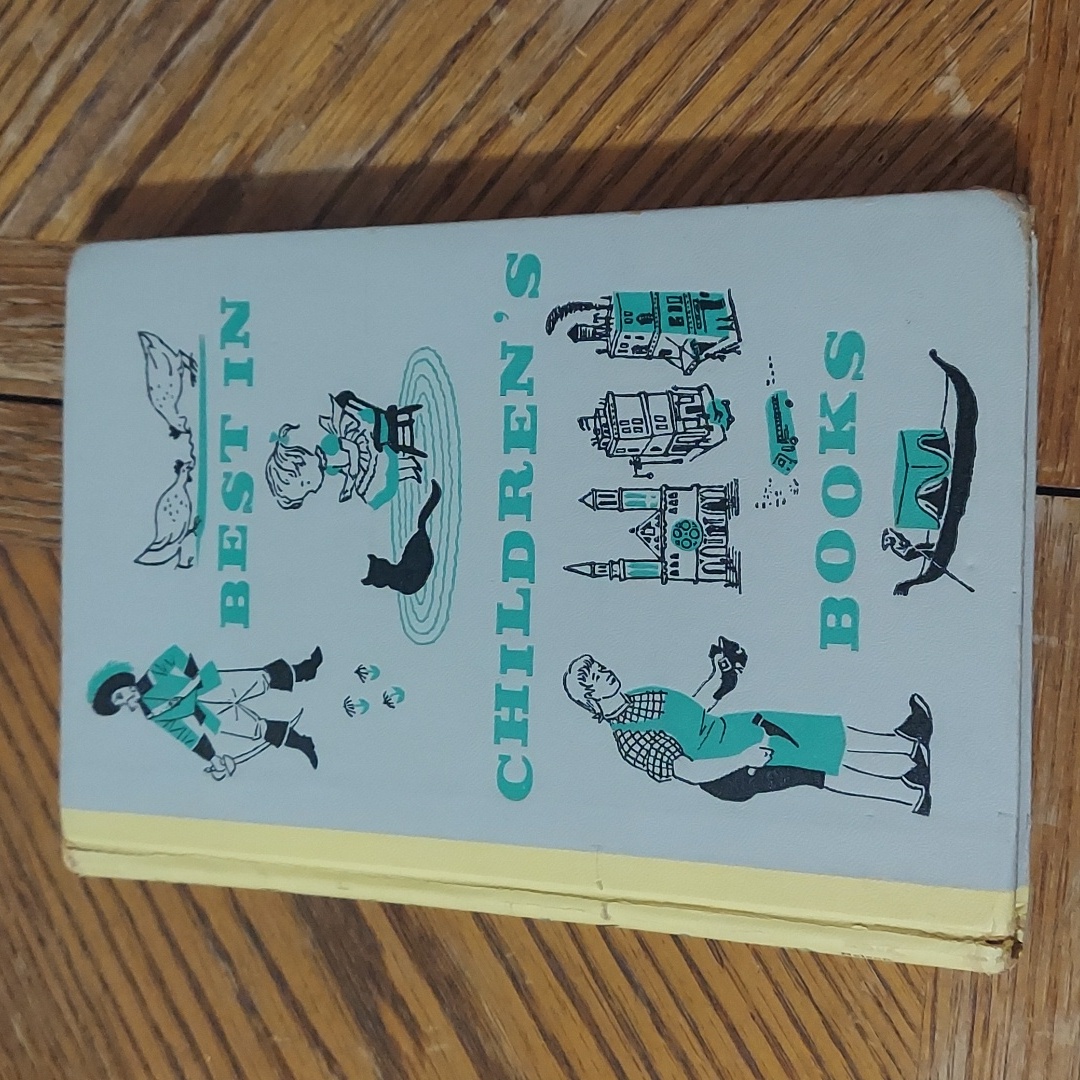
    2. Best In Children’s Books

    Best In Children's Books

    Best In Children’s Books

    by Poshmark

    $39.00

    Check Price →

    3. Best Books for Teens

    Best Books for Teens

    Best Books for Teens

    by Knetbooks.com

    $173.96

    Check Price →

  • How To Create And Sell Puzzle Books On Amazon

    How To Create And Sell Puzzle Books On Amazon

    Ever sat on a long flight or a rainy Sunday afternoon, staring at a Sudoku book, and thought, “I could probably make something like this”? It sounds like a wild dream, but there is a massive, quiet economy happening on Amazon right now. People are constantly searching for ways to unplug, and puzzle books—ranging from word searches to logic grids—are the perfect solution. The best part? You don’t need to be a math genius or a professional illustrator to get started.

    Puzzle Books

    Selling puzzle books through Amazon Kindle Direct Publishing (KDP) is a low-risk way to build a passive income stream. Unlike a traditional retail business, you don”t have to hold inventory or ship packages yourself. Amazon handles the printing and the logistics; you just provide the content. If you are looking for a beginner friendly way to enter the world of e-commerce, this is a solid place to start.

    What does the business model actually look like?

    When we talk about selling puzzle books, we are talking about Print on Demand (POD). When a customer clicks “buy” on Amazon, Amazon receives the order, prints a single copy of your book, and ships it to the customer. They then deduct the printing costs and a portion of the sale from your account, leaving you with a royalty.

    Let’s talk numbers, because that is why you are here. Most people starting this as a side hustle can expect to earn anywhere from $50 to $500 per month per book once they find a niche. It is not a “get rich quick” scheme. It takes time to build a catalog. However, compared to a vs traditional job, the upside is that your earnings aren’t capped by your hourly rate. Once a book is live, it can sell while you sleep.

    The initial startup cost

    One of the biggest draws here is the low barrier to entry. Your startup cost can be as low as $0 if you use free tools, or around $100 if you decide to invest in premium software. Here is a rough breakdown of potential expenses:

    • Canva (Free or Pro): $0 – $12/month for designing covers and interior layouts.
    • lack of Puzzle Generators (e.g., Book Bolt or Puzzle Wiz): $15 – $50/month. These tools do the heavy lifting of creating the actual puzzles.

    • Amazon KDP Account: $0. It is free to sign up and upload.
    • Research Tools (e.g., Helium 10 or Publisher Rocket): $0 – $97/month. These help you find out what people are actually searching for.

    Step 1: Finding your niche

    The biggest mistake new creators make is making a “General Puzzle Book.” If you compete with the giants, you will get buried in the search results. You need to find a specific corner of the market. Instead of “Word Search for Adults,” think “Word Search for Garden Lovers” or “Sudoku for Seniors with Large Print.”

    Finding a niche requires some digging. You want to look for topics that have high demand but low competition. Use the Amazon search bar to see what auto-fills. If you type “Word Search for…” and Amazon suggests “Word Search for Nurses,” you have found a potential goldmine. This is where you identify a specific audience with specific interests.

    How to validate your idea

    Before you spend hours creating puzzles, check the competition. Look at the Best Seller Rank (BSR) of similar books. A low BSR (usually under 100,000) means the book is selling regularly. If you see several books in a specific niche with good BSRs, that is your green light to move forward.

    Step 2: Creating the content

    You don’t need to manually draw every word search grid. That would take months. Instead, use specialized software. Tools like Book Bolt or Puzzle Wiz allow you to input a list of words, and the software instantly generates the grid for you. This turns a task that would take weeks into something you can finish in an afternoon.

    Once you have your puzzles, you need to arrange them into a cohesive book. This is where Canva comes in handy. You can create a standard 8.5″ x 11″ document and place your puzzle images onto the pages. Don’t forget to include an answer key at the back of the book. A book without answers is a recipe for one-star reviews.

    Designing a cover that sells

    Your cover is your only salesperson. If it looks amateurish, people will scroll right past it. A good cover should be clear, colorful, and communicate exactly what is inside. If it is a “Large Print” book, make sure that is prominent on the cover. Use high-quality imagery and legible fonts. You don’t need to be a graphic designer, but you do need to follow the “rules” of what looks professional in your specific niche.

    Step 3: Uploading to Amazon KDP

    Once your PDF is ready, it is time to head to the KDP dashboard. This part can feel intimidating because of all the technical jargon, but it is quite straightforward once you do it once. You will need to provide:

    1. Book Title and Subtitle: Use keywords that people actually search for.
    2. Description: Write this like you are talking to a friend. Tell them why this book is great for a gift or a relaxing afternoon.
    3. Keywords: You get seven slots. Use these for descriptive phrases, not just single words.
    4. Categories: Choose the most relevant categories so Amazon knows who to show your book to.

    The time investment for a single book, once you have the workflow down, is roughly 5 to 10 hours. This includes research, creation, and uploading. As you get faster, you can scale this up significantly.

    Managing your business long-term

    Success in KDP is a volume game. You likely won’t hit a home run with your first book. The goal is to build a library of 20, 50, or even 100 high-quality books. As your library grows, your monthly royalties become more stable. You should also keep an eye on your reviews. If customers complain about small print or errors, use that feedback to improve your next release.

    Treat this like a real business, not a hobby. Track which niches are performing well and double down on them. If your “Dog Lover” word search is flying off the shelves, consider making a “Cat Lover” version or a “Bird Watching” version.

    Ready to start your publishing journey? Pick one niche today, grab a free Canva account, and start researching. The best way to learn is by doing.

  • How To Create And Sell Puzzle Books On Amazon

    How To Create And Sell Puzzle Books On Amazon

    You probably know that feeling of scrolling through Amazon, looking for a way to make some extra cash without committing to a second 9-to-5. You see these thick, colorful Sudoku or word search books and think, “Wait, someone actually made money doing this?” The truth is, they did. Creating puzzle books is one of those low-barrier-to-entry side hustles that actually works if you approach it with a bit of strategy rather than just throwing random words into a PDF.

    Puzzle Books

    Unlike a traditional job where you trade hours for a fixed paycheck, publishing on Amazon Kindle Direct Publishing (KDP) allows you to build assets that can earn money while you sleep. You aren’t just selling a product; you are building a library of digital assets. But before you dive in, let’s get real about the numbers. You aren’t going to wake up a millionaire overnight. Most beginners start by earning anywhere from $50 to $500 a month, but as your catalog grows, that potential for passive income can scale significantly.

    The Low-Cost Setup: What You’ll Need to Start

    One of the best parts about this business is that you don’t need a massive warehouse or a printing press. Amazon handles the printing, shipping, and customer service. Your main job is the creation and the upload. Because of this, your startup costs are incredibly low.

  • Software: You can start with free tools like Canva for cover design, but for generating actual puzzles, you might want a subscription to software like Puzzle Wiz or Book Bolt.
  • Research Tools: To see what people are actually searching for, tools like Helium 10 or even just the Amazon search bar are essential.
  • Budget: If you are frugal, you can launch your first book for under $50, mostly covering software subscriptions.

When you look at the ROI of this venture, the math is quite simple. Since your overhead is mostly just your time and a small monthly software fee, every book sale that exceeds your initial cost is pure profit. There is no inventory risk, which is a massive advantage compared to traditional e-commerce.

Step 1: Finding Your Niche Through Research

The biggest mistake new publishers make is creating a “General Word Search Book.” If you search that on Amazon, you’ll see millions of results. You will be buried on page 500. To succeed, you need to find a specific corner of the market.

Targeting Micro-Niches

Instead of a generic book, think about specific demographics or interests. Instead of “Sudoku for Adults,” try “Sudoku for Seniors with Large Print” or “Cryptograms for Star Wars Fans.” The more specific you are, the less competition you face. Look for niches where the demand is steady but the current book covers are poor quality or outdated.

Analyzing the Competition

Go to Amazon and look at the best-sellers in the puzzle category. Read the 1-star and 2-star reviews of your competitors. Are people complaining that the font is too small? Is the paper quality bad? Is the puzzle difficulty inconsistent? These complaints are your roadmap. If you can fix the problems existing books have, you have a winning product.

Step 2: Generating the Content

You don’t need to be a math genius to create Sudoku or a linguist to create word searches. There is software designed specifically to do the heavy lifting. Tools like Book Bolt or Puzzle Wiz allow you to input themes and automatically generate formatted, print-ready pages.

However, don’t just “set it and forget it.” A lot of people generate thousands of puzzles and upload them without checking for errors. A single broken puzzle can lead to a string of bad reviews that kills your book’s visibility. Spend time verifying that your word lists make sense and that the difficulty levels are consistent. This extra bit of effort is what separates the hobbyists from the professionals.

Step 3: Designing a Cover That Converts

On Amazon, people absolutely judge a book by its cover. Your cover is your primary marketing tool. It needs to look professional, communicate exactly what is inside, and stand out in a tiny thumbnail image.

A good puzzle book cover should have:

  • High contrast colors: Make sure the title is readable even when the image is small.
  • Clear typography: Use bold, easy-to-read fonts.
  • Visual cues: If it’s a large-print book, mention “Large Print” prominently on the cover.
  • A cohesive theme: The interior style should match the vibe of the cover.

If you aren’t a designer, Canva is a fantastic place to start. They have templates that can guide you, but try to customize them enough so your book doesn’t look like every other template on the web.

Step 4: Uploading and Optimizing for Amazon KDP

Once your PDF is ready, it’s time to head to the KDP dashboard. This is where the “SEO” part of your business happens. You need to choose a title, subtitle, and seven keywords that will help Amazon’s algorithm find you.

Don’t just stuff keywords into your title. It needs to sound natural. Use the subtitle to expand on the features, such as “100 Hard Puzzles for Brain Training and Stress Relief.” When choosing your seven backend keywords, avoid repeating words already in your title. Think about what a customer would actually type into the search bar, such as “gifts for grandmothers” or “travel activities for adults.”

The Reality Check: How Much Can You Earn?

I want to be very honest here: how much can you earn is entirely dependent on your volume and your niche selection. If you upload one book and wait, you will likely earn $0. This is a volume game.

Some publishers manage a catalog of 50-100 high-quality books and see a steady monthly income that rivals a part-time job. Others have hit “home runs” with a single niche book that generates thousands of dollars a month. The difference is usually the amount of research done before the first page was ever designed. It is a marathon, not a sprint.

Final Thoughts and Next Steps

Creating puzzle books is a legitimate way to build a digital asset library. It requires patience, a bit of technical learning, and a lot of research, but the low risk makes it an incredible way to start an online business. You don’t need a huge budget; you just need a plan.

Ready to start your publishing journey? Pick one niche today—just one—and spend an hour researching what people are searching for on Amazon. Your first book is waiting to be made.

Our Top Picks

Products we recommend:

1. Amazon Self Publisher: How to Sell More Books on Amazon

Amazon Self Publisher: How to Sell More Books on Amazon

Amazon Self Publisher: How to Sell More Books on Amazon

by Audiobooks.com

$24.99

Check Price →

2. How to Sell Anything on Amazon…and Make a Fortune!

How to Sell Anything on Amazon...and Make a Fortune!

How to Sell Anything on Amazon…and Make a Fortune!

by Knetbooks.com

$31.81

Check Price →

3. iPhone Millionaire: How to Create and Sell Cuttin

iPhone Millionaire:  How to Create and Sell Cuttin

iPhone Millionaire: How to Create and Sell Cuttin

by eCampus.com

$19.80

Check Price →

  • Kdp Low Content Book Ideas That Sell

    Kdp Low Content Book Ideas That Sell

    You’ve probably seen those screenshots on Instagram or YouTube: someone sitting on a beach, showing a dashboard of Amazon KDP royalties totaling thousands of dollars. It looks incredibly tempting, especially when you start thinking about the freedom of a passive income stream vs traditional job stability. But here is the truth nobody tells you right away: simply uploading a generic notebook with a pretty floral cover won’t make you a dime. The market is saturated with “junk” books, and to actually see a return, you need a strategy built around specific niches.

    Book Proposals That Sell

    Low-content publishing is essentially the art of creating books that require minimal text—think journals, planners, and logbooks. The beauty of this business model isn’t in the complexity of the writing, but in the precision of your research. If you can find a group of people with a specific problem or hobby and provide a structured way for them to track it, you have a product.

    Understanding the real economics of KDP

    Before we look at the actual ideas, let’s talk numbers. You might be wondering, how much can you earn by doing this? It varies wildly. I’ve seen creators making $50 a month from a small hobby collection, while others manage $2,000+ monthly by dominating specific micro-niches. It is rarely a “get rich quick” scheme; it is more of a long-term build.

    When calculating your potential ROI, you have to look at your initial outlays. The good news is that your startup costs are remarkably low. You can start with $0 if you use free tools like Canva or Google Slides. If you want to level up, a subscription to Book Bolt or a professional design tool might cost you around $15-$30 a month. Your biggest investment isn’t money, though—it is your time spent researching keywords and designing interiors.

    Expect to spend anywhere from 5 to 15 hours per book if you are doing everything yourself, including keyword research, cover design, and uploading. If you treat this like a side hustle, a realistic goal is to aim for 10-20 high-quality, well-researched books in your first few months.

    Profitable low-content niches to explore

    To avoid the “sea of notebooks” trap, you need to move away from generic terms. Instead of “Journal,” think “Garden Planting Logbook” or “Blood Pressure Tracker for Seniors.” Here are some specific areas where you can find traction.

    Niche 1: Activity and Hobby Trackers

    People who are passionate about hobbies love documenting their progress. This is a goldmine because these users are often looking for specific structures that a blank notebook doesn’t provide.

    • Bird Watching Logs: Pages for species, date, location, and weather conditions.
    • Fishing Logs: Space for lure type, water temperature, and catch weight.
    • Wine or Whiskey Tasting Journals: Structured fields for notes on aroma, acidity, and finish.
    • Plant Care Trackers: For indoor jungle enthusiasts to track watering and fertilizing schedules.

    Niche 2: Health and Wellness Logs

    Health-related books are evergreen. People managing specific dietary needs or fitness goals need organization. However, be careful with “medical advice” language; stick to providing a place for them to record their own data.

    • Glucose Monitoring Logs: Simple, easy-to-read grids for diabetic users.
    • Symptom Trackers: For individuals dealing with chronic fatigue or migraines.
    • Fitness Progress Journals: Focused on weightlifting sets, reps, and rest periods.
    • Meal Planning and Grocery Lists: A utility-based book that people use weekly.

    Niche 3: Professional and Educational Organizers

    Teachers, real estate agents, and small business owners are often looking for ways to streamline their paperwork. These users are willing to pay for a tool that makes their workday easier.

    • Lesson Plan Templates: For homeschooling parents or substitute teachers.
    • Real Estate Closing Checklists: A structured way to ensure no step is missed during a sale.
    • Cleaning Schedule Logs: For Airbnb hosts or professional cleaners to track turnover tasks.

    Tools to help you succeed

    You don’t need to be a graphic designer to do this, but you do need the right toolkit. Using professional-grade tools will help your books stand out against the amateur competition.

    1. Canva: The industry standard for beginners. It is great for creating covers and simple interior layouts.
    2. Book Bolt: This is a specialized tool for KDP sellers. It helps with keyword research, niche finding, and even provides interior templates.
    3. Creative Fabrica: A fantastic resource for finding commercial-use fonts and graphics so your covers don’t look like everyone else’s.
    4. Amazon Search Bar: Never underestimate the power of the “incognito” search. Type a keyword and see what Amazon’s auto-fill suggests—those are real terms people are searching for.

    Common pitfalls to avoid

    The most frequent mistake I see is “keyword stuffing” the title. While you want to be searchable, if your title looks like a string of random words, Amazon might flag it, or worse, customers will find it untrustworthy. Focus on a human-readable title and use the 7 backend keyword slots for your more technical terms.

    Another mistake is ignoring the “look inside” feature. Since customers can often preview the interior, make sure your pages are clean, functional, and easy to use. A beautiful cover will get the click, but a terrible interior will result in the one-star reviews that kill your sales.

    Finally, don’t get discouraged by slow starts. It is common to upload 10 books and see zero sales. This isn’t a sign to quit; it’s a sign to refine your research. Success in KDP comes from iterative learning—analyzing what works, doubling down on those niches, and abandoning the ones that don’t.

    If you are ready to start your publishing journey, pick one niche from the list above, spend this weekend researching it deeply, and aim to upload your first functional logbook by Monday. The best way to learn is by doing.

    Our Top Picks

    Products we recommend:

    1. Book Proposals That Sell

    Book Proposals That Sell

    Book Proposals That Sell

    by Knetbooks.com

    $19.86

    Check Price →

    2. Book Proposals That Sell

    Book Proposals That Sell

    Book Proposals That Sell

    by BiggerBooks.com

    $19.56

    Check Price →

    3. Book Proposals That Sell

    Book Proposals That Sell

    Book Proposals That Sell

    by eCampus.com

    $7.51

    Check Price →

  • How To Create And Sell Puzzle Books On Amazon

    How To Create And Sell Puzzle Books On Amazon


    Have you ever sat down with a Sudoku book or a word search pad and thought, “I could probably make something like this”? It sounds like a massive undertaking, but the truth is that a huge portion of the books you see on Amazon are created by individuals working from their kitchen tables. This is the world of KDP (Kindle Direct Publishing), and it is one of the most accessible ways to start a low-content publishing business.

    Puzzle Books

    Unlike writing a 300-page novel, creating puzzle books focuses on utility rather than prose. You aren’t worrying about character arcs or plot holes; you are focusing on logic, patterns, and user experience. If you have a knack for organization and a bit of patience, you can build a library of digital assets that generate passive income while you sleep.

    The low-barrier entry of Amazon KDP

    Amazon KDP is a print-on-demand service. This means you upload your PDF, and Amazon handles the printing, shipping, and customer service. When someone buys your book, Amazon prints a copy, takes their cut of the sale, and sends you a royalty. This setup is incredibly beginner friendly because you don’t need to hold any inventory or rent a warehouse.

    Let’s talk numbers. Your initial startup cost can be as low as zero dollars if you use free tools. However, if you want to speed up the process, you might spend anywhere from $50 to $200 on software subscriptions or professional cover design. Most people see a realistic ROI after their first 5 to 10 books find their audience, though some months might be slower than others.

    Estimating your time and earnings

    Creating a single high-quality puzzle book—say, a 100-page Sudoku collection—might take you anywhere from 5 to 15 hours depending on your workflow. This includes researching niches, generating the puzzles, formatting the interior, and designing the cover. Once the book is live, the maintenance time is nearly zero.

    Income varies wildly. Some creators make an extra $50 a month from a small hobbyist collection, while more dedicated publishers managing hundreds of titles can earn $2,000 to $5,000+ per month. It is rarely a “get rich quick” scheme; it is more of a slow-build asset business.

    Choosing your puzzle niche

    The biggest mistake new publishers make is trying to sell a “General Puzzle Book.” If you compete against the giants, you will lose. You need to find a specific corner of the market where people are searching but not finding enough high-quality options.

    Instead of “Word Search,” think about these specific angles:

    • Word Search for Seniors (with large print for easy reading)
    • Cryptograms for 1980s Movie Lovers
    • Sudoku for Kids Ages 6-8
    • Logic Puzzles for Commuters

    Use tools like Amazon’s search bar or Helium 10 to see what people are actually typing into the search box. If you see a lot of search results but the existing books have terrible covers or bad reviews, you have found a gap in the market.

    The toolkit for puzzle creation

    You don’t need to be a mathematician to create puzzles. There are several specialized tools that do the heavy lifting for you. Here is a breakdown of what you might need:

    Puzzle Generation Software

    Software like Puzzle Wiz or Book Bolt allows you to generate hundreds of puzzles in minutes. These platforms are great because they ensure your puzzles are mathematically sound and formatted correctly for printing. If you are on a budget, you can even find Python scripts or simpler generators online that output CSV or image files.

    Design and Formatting

    Your interior needs to be a clean PDF. Canva is a fantastic, free-to-start option for designing your book covers and even arranging your puzzle pages. For more advanced layouts, Adobe InDesign is the industry standard, but it comes with a steeper learning curve and a monthly fee.

    Research Tools

    To find out which keywords are profitable, consider using Publisher Rocket. It helps you see the estimated monthly revenue of specific keywords and how much competition you’ll face. It is a paid tool, but it can save you dozens of hours of wasted effort on books that no one is looking for.

    Step-by-step workflow

    Follow this sequence to avoid getting overwhelmed by the process:

    1. Market Research: Identify a niche with high demand and low-to-medium competition.
    2. able

    3. Content Generation: Use your chosen software to create a set of unique, high-quality puzzles.
    4. Interior Formatting: Arrange the puzzles in a PDF. Ensure you include a “Solutions” section at the back of the book.
    5. Cover Design: Create a bright, readable cover that clearly communicates what is inside.
    6. Upload to KDP: Upload your files, choose your keywords, and set your price.
    7. Optimization: Once live, monitor your sales and adjust your keywords if the book isn’t getting traction.

    Common pitfalls to avoid

    One of the most frequent errors is “keyword stuffing” in your title. Amazon has strict rules about this. Don’t name your book “Sudoku Word Search Puzzle Book for Kids Fun Activity Book.” This looks like spam and can get your account flagged. Keep your title descriptive and your subtitle informative.

    Another issue is quality control. Always print a test copy of your book using the “Print Preview” feature on KDP. You would be surprised how often margins are too small, causing parts of the puzzle to be cut off during the printing process. A book with cut-off content will result in 1-star reviews, which is a death sentence for a new author.

    Finally, don’t ignore the importance of the “Look Inside” feature. Amazon allows customers to preview the first few pages. If your interior looks messy or unprofessional, they will click away. Treat your interior design with the same respect as your cover design.

    If you are ready to stop consuming content and start creating it, pick one niche today and start researching. The best way to learn is by doing. Start small, learn the tools, and slowly build your library one book at a time.

    Our Top Picks

    Products we recommend:

    1. Amazon Self Publisher: How to Sell More Books on Amazon

    Amazon Self Publisher: How to Sell More Books on Amazon

    Amazon Self Publisher: How to Sell More Books on Amazon

    by Audiobooks.com

    $24.99

    Check Price →

    2. iPhone Millionaire: How to Create and Sell Cuttin

    iPhone Millionaire:  How to Create and Sell Cuttin

    iPhone Millionaire: How to Create and Sell Cuttin

    by eCampus.com

    $19.80

    Check Price →

    3. How to Sell on Amazon and Product Research: Product Research Tips and Practical Guide on How to Find a Winning Product to Sell on Amazon Fba –

    How to Sell on Amazon and Product Research: Product Research Tips and Practical Guide on How to Find a Winning Product to Sell on Amazon Fba -

    How to Sell on Amazon and Product Research: Product Research Tips and Practical Guide on How to Find a Winning Product to Sell on Amazon Fba –

    by Chirp Books

    $5.99

    Check Price →

  • Best Niches For Kdp Puzzle Books In 2026

    Best Niches For Kdp Puzzle Books In 2026

    Let’s be honest: the “low-content” gold rush of 2018 is long gone. If you go onto Amazon today and search for “word search book,” you’ll see millions of results, most of them looking like they were made in five minutes by a bot. But here is the good news: the demand for high-quality, specialized puzzle books isn’t shrinking. In fact, as people look for ways to disconnect from screens, the hunger for tactile, “analog” entertainment is growing.

    August September Secret Kdp Niches by Elimesherstudio | Creative Market

    As we look toward 2026, the strategy for Kindle Direct Publishing (KDP) has shifted from quantity to specificity. You can no longer just throw a generic Sudoku book at the wall and hope it sticks. You need to find pockets of interest where competitors are lazy. If you are weighing this vs traditional job stability, you need to understand that success here depends on your ability to spot trends before they become saturated.

    Finding Your Edge in a Saturated Market

    The secret to surviving in KDP isn’t about finding a niche with zero competition—that niche probably has zero customers. Instead, you want to find “micro-niches.” These are specific sub-categories where enthusiasts are looking for something tailored to their unique hobbies, professions, or lifestyles. Instead of a “Brain Games Book,” think “Sudoku for Retired Nurses” or “Cryptograms for True Crime Fans.”

    < multiplier-logic>

    When you narrow your focus, your advertising costs drop because your keywords are much more precise. You aren’t bidding on expensive, broad terms; you are bidding on specific interests. This is how small creators compete with big publishing houses.

    Top Profitable Puzzle Niches for 2026

    Predicting the future is tricky, but based on current shifts in lifestyle and aging demographics, these three areas show massive potential for the next few years.

    1. The Neurodivergent & Cognitive Care Niche

    There is a massive, underserved market for puzzles designed specifically for neurodivergent brains (ADHD, Autism) or for seniors dealing with early-stage cognitive decline. These aren’t just standard puzzles; they require specific formatting. For example, larger fonts, higher contrast, and instructions that don’t overwhelm the reader. This is a high-value niche because the customers are incredibly loyal once they find a brand they trust.

    2. Hyper-Specific Hobbyist Crosswords

    People love to see their passions reflected in the content they consume. We are seeing a rise in “themed” puzzle books. Think about niches like:

    • Vintage Botany and Herbology
    • Urban Beekeeping and Permaculture
    • Retro 80s/90s Nostalgia
    • Specific breed enthusiast books (e.g., Golden Retriever lovers)

    These readers aren’t just buying a book; they are buying a way to celebrate their identity.

    3. The “Unplugged” Travel Companion

    As digital detox trends continue to grow, there is a huge opportunity for “Traveler’s Log Puzzles.” These are small-format, pocket-sized books designed specifically for long train rides, camping trips, or flight delays. The focus here is on portability and durability.

    The Financial Reality: What to Expect

    I don’t want to sugarcoat this. This isn’t a “get rich overnight” scheme. It is a real business that requires research and design skills. If you are wondering how much can you earn, the answer is highly variable. Some creators earn an extra $200 a month to cover groceries, while others running a library of 500+ high-quality books can see much higher figures.

    Let’s look at the numbers realistically:

    • Realistic Monthly Income: $50 to $2,000+ (depending on your catalog size and ad spend).
    • Startup Cost: $50 – $200. This covers your KDP account (free), a subscription to a design tool like Canva Pro or Adobe Creative Cloud, and perhaps a small budget for a specialized puzzle generator like Puzzle Wiz or Book Bolt.
    • Time Investment: 5 to 15 hours per book. This includes niche research, puzzle creation, formatting, and uploading.

    Breaking Down the Startup Cost

    You don’t need a massive budget to start. In fact, starting too big is a mistake. You can begin with just a laptop and a Canva subscription. The most significant “cost” is actually your time spent on keyword research. Using tools like Helium 10 or Publisher Rocket can give you an edge, but they come with monthly fees. If you are on a tight budget, start by manually analyzing Amazon’s “Auto-complete” feature to see what people are searching for.

    Essential Tools for Your 2026 Toolkit

    To compete in 2026, your books must look professional. If your interior looks like a messy Word document, you will get one-star reviews that kill your sales instantly. Here is what you should be using:

    1. Puzzle Generation: Tools like Book Bolt or specialized software for generating Sudoku, Word Search, and Mazes. This saves you dozens of hours of manual work.
    2. Graphic Design: Canva is the gold standard for beginners, but if you want to create truly unique covers that stand out, learning the basics of Adobe Illustrator or Affinity Designer is a massive advantage.
    3. Market Research: Publisher Rocket is the industry favorite for finding profitable keywords and seeing the estimated monthly revenue of competitors.

    Common Pitfalls to Avoid

    The biggest mistake I see new creators making is “niche jumping.” They create one book, it doesn’t sell in the first week, and they quit. KDP is a volume and testing game. You need to build a library. Another trap is ignoring the “Look Inside” feature. Amazon allows customers to preview your interior. If your puzzles are poorly formatted or the text is too small to read, you’ve lost the sale before they even hit the buy button.

    Lastly, don’t ignore the importance of quality over quantity. One incredible, well-researched book in a micro-niche will outperform fifty generic, low-effort word search books every single time.

    Ready to Start Your KDP Journey?

    The best time to start was a year ago; the second best time is today. Don’t wait until you have the “perfect” plan. Pick one small hobby you are interested in, research the competition, and try to create your first high-quality puzzle book. The learning process is where the real profit lies.

    If you found this helpful, subscribe to our newsletter for more deep dives into sustainable side hustles and digital publishing strategies.

    Our Top Picks

    Products we recommend:

    1. 3000 Best Kdp Coloring Book Niches by Elimesherstudio | Creative Market

    3000 Best Kdp Coloring Book Niches by Elimesherstudio | Creative Market

    3000 Best Kdp Coloring Book Niches by Elimesherstudio | Creative Market

    by Creative Market

    $11.00

    Check Price →

    2. Best Of The Week Sunday Crosswords: New York Magazine Crossword Puzzle Books For Adults, Crossword Puzzle Books For Adults Large P

    Best Of The Week Sunday Crosswords: New York Magazine Crossword Puzzle Books For Adults, Crossword Puzzle Books For Adults Large P

    Best Of The Week Sunday Crosswords: New York Magazine Crossword Puzzle Books For Adults, Crossword Puzzle Books For Adults Large P

    by Indigo Books & Music

    $9.50

    Check Price →

    3. Best Books for Teens

    Best Books for Teens

    Best Books for Teens

    by Knetbooks.com

    $155.93

    Check Price →