Blog

  • Best Wireless Earbuds in 2026

    Best Wireless Earbuds in 2026

    Finding the best wireless earbuds in today’s crowded market can feel like an overwhelming task. With hundreds of models ranging from ultra-budget options to premium audiophile-grade gear, the sheer variety of features—such as Active Noise Cancellation (ANC), spatial audio, and multi-point connectivity—can make it difficult to decide which best wireless earbuds to buy. Whether you are a frequent traveler looking to block out engine drone, an athlete needing a secure fit for heavy workouts, or a professional needing crystal-clear microphone quality for calls, your choice will directly impact your daily listening experience.

    In this comprehensive best wireless earbuds review, we dive deep into the top contenders of the year. To find the top best wireless earbuds 2026, we didn’t just look at brand names; we analyzed sound profiles, battery longevity,- comfort levels, and software ecosystems. We evaluated how these devices perform in real-world scenarios like noisy commutes, intense gym sessions, and long office hours.

    This guide is designed for anyone searching for the best best wireless earbuds regardless of their budget. Whether you are a tech enthusiast seeking the absolute cutting edge or a casual listener looking for the best value for your money, our detailed breakdown will help you handle the technical jargon and find the perfect pair for your lifestyle.

    Product Price Best For Rating
    Sony WF-1000XM5 $299 Premium Noise Cancellation 4.9/5
    Apple AirPods Pro (2nd Gen) $249 Apple Ecosystem Users 4.8/5
    Jabra Elite 8 Active $199 Fitness & Durability 4.7/5
    Beats Fit Pro $179 Secure Fit for Athletes 4.5/5
    Soundcore Liberty 4 NC $99 Budget Performance 4.6/5

    Sony WF-1000XM5 vs Apple AirPods Pro (2nd Gen): Which Is Better?

    When deciding between the Sony WF-1000XM5 and the Apple AirPods Pro (2nd Gen), the winner depends heavily on your smartphone ecosystem. The Sony model is a powerhouse for pure audio fidelity and industry-leading noise cancellation, offering much deeper customization via its companion app. It supports LDAC for high-resolution audio, making it a dream for audiophiles using Android devices.

    On the other hand, the AirPods Pro (2nd Gen) provides an unparalleled “it just works” experience for iPhone users. The integration with iOS—featuring instant pairing, automatic device switching between Macs and iPads, and Find My support—is unmatched. However, if you are on Android, you lose access to many of the key features that make these earbuds worth their premium price. If you prioritize sound customization and ANC depth, go Sony; if you live in the Apple ecosystem, the AirPods Pro remain the superior choice.

    Sony WF-1000XM5

    The Sony WF-1000XM5 sets a new benchmark for what premium wireless earbuds should achieve. Featuring an incredibly compact design compared to its predecessor, these buds offer world-class Active Noise Cancellation that effectively silences even high-frequency chatter. The sound signature is rich, detailed, and supports high-resolution codecs like LDAC. With improved microphone technology, voice calls are remarkably clear even in windy environments. It remains a top contender for anyone seeking the best best wireless earbuds for immersive listening.

    Best for: Audiophiles and frequent travelers seeking premium ANC.

    Pros

    • Industry-leading noise cancellation
    • Supports LDAC for high-res audio
    • Compact and comfortable design

    Cons

    • Premium price point
    • Foam tips can feel slightly invasive to some

    Apple AirPods Pro (2nd Gen)

    The Apple AirPods Pro (2nd Gen) continues to dominate the market for users within the Apple ecosystem. The integration of the H2 chip allows for seamless switching between your iPhone, iPad, and Mac, making them incredibly convenient for productivity. The Adaptive Audio feature intelligently blends Transparency mode and Active Noise Cancellation based on your surroundings. While they don’t offer the same level of manual EQ customization as Sony, their spatial audio implementation is breathtakingly immersive.

    Best for: iPhone and Mac users looking for seamless integration.

    Pros

    • Seamless Apple ecosystem integration
    • Excellent Transparency mode
    • Superior Spatial Audio performance

    Cons

    • Limited functionality on Android devices
    • Expensive compared to competitors

    Jabra Elite 8 Active

    If you are looking for the most rugged pair of earbuds, the Jabra Elite 8 Active is the clear winner. These earbuds are engineered with “ShakeGrip” technology, ensuring they stay in your ear during even the most intense cardio sessions. They boast an incredible IP68 rating, making them fully waterproof and dustproof. Beyond durability, the sound quality is punchy and well-balanced, making them a fantastic all-rounder for both gym use and daily commuting.

    Best for: Athletes and outdoor enthusiasts.

    Pros

    • Extremely durable (IP68 rating)
    • Secure, comfortable fit without wings
    • Great battery life

    Cons

    • ANC is not as strong as Sony or Apple
    • App features are somewhat basic

    Beats Fit Pro

    The Beats Fit Pro bridges the gap between lifestyle fashion and athletic performance. Featuring a flexible wingtip design, these earbuds provide a highly secure fit that won’t budge during heavy lifting or running. Because they are powered by Apple’s H1 chip, they offer many of the same “magic” features as AirPods, such as one-tap pairing and “Hey Siri” functionality. They deliver a more bass-heavy, energetic sound profile that is perfect for workout playlists.

    Best for: Users who want an Apple-like experience with a secure athletic fit.

    Pros

    • Very secure wingtip design
    • Great integration with iOS
    • Energetic, bass-forward sound

    Cons

    • Bulky case compared to AirPods
    • No wireless charging for the case

    Soundcore Liberty 4 NC

    For those on a budget, the Soundcore Liberty 4 NC is arguably the best value in the industry. It punches far above its weight class, offering impressive Active Noise Cancellation that rivals much more expensive models. The battery life is stellar, often outlasting premium competitors during long flights. While the build quality feels slightly more “plastic” than the Sony or Apple options, the sheer amount of features—including customizable EQ and multi-point connection—makes it a standout.

    Best for: Budget shoppers who refuse to compromise on ANC.

    Pros

    • Incredible value for the price
    • Effective noise cancellation
    • Long battery life

    Cons

    • Microphone quality is average
    • Not as comfortable for long-term wear

    How We Picked

    To determine the top best wireless earbuds 2026, our team followed a rigorous testing protocol. We evaluated each product based on four primary pillars: Sound Quality (frequency response and detail), Noise Cancellation (effectiveness in varying environments), Comfort/Fit (long-term wearability and stability), and Battery/Connectivity (longevity and multi-device handling). Every pair was tested through real-world usage, including airplane cabin noise simulations, treadmill running, and professional Zoom calls, to ensure our best wireless earbuds review provides authentic, actionable advice.

    Frequently Asked Questions

    What is the most important feature to look for in wireless earbuds?

    It depends on your lifestyle. If you commute, prioritize Active Noise Cancellation (ANC). If you are an athlete, focus on IP ratings (water/dust resistance) and a secure fit. For music lovers, look for high-quality codec support like LDAC or AAC.

    Are expensive wireless earbuds actually worth the extra money?

    Generally, yes. Premium earbuds like the Sony WF-1000XM5 offer significantly better noise cancellation, higher-fidelity audio, and more robust software features that justify the higher price for power users.

    Can I use these earbuds with both Android and iPhone?

    Most earbuds, such as Jabra or Soundcore, work seamlessly with both. However, certain features of Apple AirPods Pro are exclusive to iOS, while Sony’s best audio codecs (LDAC) primarily benefit Android users.

    Where to Buy / Best Deals

    If you are ready to upgrade your audio game, here are our current recommendations for finding the best deals:

    • Sony WF-1000XM5: Often found at a discount on Amazon during seasonal sales. Check local electronics retailers for bundle deals.
    • Apple AirPods Pro (2nd Gen): Best purchased via the Apple Store or Amazon; look for “Renewed” options on Amazon for significant savings.
    • Jabra Elite 8 Active: Keep an eye on fitness specialty stores and Amazon for frequent price drops.
    • Beats Fit Pro: Frequently bundled with iPhone purchases; check Best Buy for great periodic promotions.
    • Soundcore Liberty 4 NC: The best place to buy is directly from the Anker/Soundcore website or Amazon, where they often run limited-time coupon codes.

    Final Verdict: If you want the absolute best overall performance and don’t mind the price, the Sony WF-1000XM5 is our top pick for its unmatched sound and noise cancellation capabilities.

  • Kdp Low Content Book Ideas That Sell

    Kdp Low Content Book Ideas That Sell

    I remember sitting at my kitchen table two years ago, staring at a pile of bills and wondering if there was any way to make an extra few hundred dollars a month without committing to a second shift at my regular job. That curiosity led me to Amazon KDP (Kindle Direct Publishing). If you’ve been scrolling through YouTube or TikTok, you’ve likely seen people claiming they made millions selling notebooks. Let’s be real: that rarely happens. However, building a steady stream of passive income through low-content books is a very real possibility if you focus on the right niches.

    Low-content books are essentially journals, planners, or logbooks where the interior is repetitive or requires minimal text. The beauty of this model is that once the file is uploaded, Amazon handles the printing, shipping, and customer service. You just design, upload, and monitor your royalties. If you are looking for a beginner friendly way to start an online business, this is one of the lowest barrier-to-entry methods available.

    What does it actually cost to start?

    One of the biggest perks of KDP is the lack of inventory. You aren’t buying 500 units of a notebook and hoping they sell; you only pay when a customer clicks “buy.” This makes it a great alternative vs traditional job models that require heavy upfront capital.

    To get started, your startup costs are incredibly low:

    • Design Software: Canva is the gold standard for beginners. The free version works, but Canva Pro saves hours with its “magic resize” and premium elements.
    • built-in tools like Book Bolt can help you find niches and automate interiors.

    • Research Tools: Helium 10 or Publisher Rocket are great if you want to get serious about keyword data.
    • Internet and Computer: You likely already have these.

    Total initial investment? You can literally start with $0, though spending around $20-$50 on a Canva subscription or basic research tools will significantly speed up your progress.

    How much can you earn with low-content books?

    I get asked how much can you earn every single day. The honest answer is: it depends entirely on your volume and niche selection. You won’t become a millionaire overnight by uploading one notebook. Most successful KDP publishers operate like a digital real estate empire. One book might make $5 a month, but if you have 200 books each making $5, that’s $1,000 in monthly royalties.

    Realistic income ranges look like this:

    • The Hobbyist: 1-10 books. Income: $10 – $100 per month. This covers your coffee habit and maybe a small subscription.
    • The Side Hustler: 50-200 books. Income: $300 – $1,500 per month. This is enough to cover a car payment or groceries.
    • The Pro Publisher: 500+ books in high-demand niches. Income: $3,000+. This requires significant time investment and deep keyword research.

    Profitable low-content book ideas for beginners

    Avoid the “Notebook Trap.” If you just upload a blank lined notebook, you are competing with millions of others. You need to find a specific person with a specific problem. Instead of “Notebook,” think “Daily Fitness Tracker for Busy Moms” or “Fishing Logbook for Bass Enthusiating.”

    Niche 1: Specialized Logbooks

    Logbooks are much more profitable than standard journals because they serve a utility purpose. People buy them to track progress, which creates repeat usage and high value.

    • Blood Pressure/Glucose Trackers: Great for the elderly or those managing health conditions.
    • Garden Planners: For people tracking planting dates, soil types, and harvest yields.
    • Pet Health Records: Helping puppy owners track vaccinations and feeding schedules.

    Niche 2: Hobby-Specific Journals

    Identify a community that spends money on their passion. These enthusiasts are often looking for ways to document their journey.

    Think about birdwatching journals, sourdough bread baking logs, or even scrapbooking organizers. When you target a hobby, your keywords become much more specific and less competitive than generic terms like “journal.”

    Niche 3: Educational Workbooks for Kids

    While this borders on “mid-content,” simple activity books are massive on Amazon. You don’t need to be an educator; you just need a good layout for tracing letters, coloring pages, or simple math problems. These are evergreen because parents are constantly looking for screen-free activities.

    Time investment and the learning curve

    Don’t expect to spend 10 minutes and see results. To do this right, you need to invest time in learning Amazon SEO (Search Engine Optimization). You need to understand how to find “long-tail keywords”—the specific phrases people actually type into the search bar.

    A realistic time commitment for a beginner might look like 5-10 hours per week. This includes:

    1. Keyword research (2 hours)
    2. Interior design/creation (2 hours)
    3. Cover design (1 hour)
    4. Uploading and metadata optimization (1 hour)

    Common mistakes to avoid

    The biggest mistake I see is “keyword stuffing.” Don’t just cram every possible word into your title. Amazon’s algorithm is smart, and if your title looks like spam, they will reject your book or shadow-ban it from search results. Your title should be readable and human-centric.

    Another pitfall is ignoring the cover. You can have the most amazing interior in the world, but if the cover looks amateurish, nobody will click. Treat your cover like a billboard. It needs to stop the scroll.

    Ready to start your publishing journey?

    The best way to learn KDP is by doing. Don’t wait until you have mastered every design tool or found the “perfect” niche. Pick one simple idea—perhaps a themed gratitude journal—and try to get it live on Amazon this week. The lessons you learn from your first upload are worth more than any course you could buy.

    If you’re ready to take the first step, grab a free Canva account and start browsing Pinterest for cover inspiration today!

  • Best Webcams For Streaming in 2026

    Best Webcams For Streaming in 2026

    In the era of high-definition digital content, your video quality is often the first impression you make on your audience. Whether you are an aspiring Twitch streamer, a professional YouTuber, or a corporate presenter, the clarity and fluidity of your video stream directly impact viewer retention and engagement. Choosing the best webcams for streaming isn’t just about finding the highest resolution; it is about balancing frame rates, color accuracy, light sensitivity, and ease of use to create a professional-looking broadcast.

    When searching for the top webcams for streaming 2026, you need to look beyond simple megapixels. Key factors include sensor size (which dictates how well you perform in low light), field of view (to ensure your entire setup is visible), and software integration with platforms like OBS or Streamlabs. A great webcam should provide a natural skin tone and minimal motion blur during high-action gameplay or movement.

    This comprehensive webcams for streaming review is designed for content creators at every level. Whether you are a budget-conscious beginner looking for your first upgrade or a seasoned pro seeking a premium 4K replacement, this guide will help you handle the crowded marketplace and decide which webcams for streaming to buy based on your specific technical needs and budget.

    Quick Comparison Table

    Product Price Best For Rating
    Logitech C920s Pro $79 Budget Beginners 4.5/5
    Razer Kiyo Pro $99 Low-Light Gaming
    Logitech Brio 4K $199 Professional Creators 4.8/5
    Elgato Facecam $139 High-FPS Streamers 4.7/ 5

    Head-to-Head: Logitech Brio 4K vs. Elgato Facecam

    If you are deciding between a high-end multipurpose webcam and a dedicated streaming tool, this is the ultimate showdown. The Logitech Brio 4K is an incredible all-rounder, offering massive resolution and excellent HDR capabilities that make it great for both video calls and high-quality recording. However, its focus is on versatility.

    On the other hand, the Elgato Facecam is purpose-built for the streaming community. While it lacks the 4K resolution of the Brio, it prioritizes a higher frame rate (60 FPS) at 1080p and offers much deeper control over manual settings like shutter speed and ISO through the Camera Hub software. If you want the sharpest possible image for fast-paced gaming, the Facecam wins; if you want cinematic detail and versatility, the Brio is your best bet.

    Detailed Product Reviews

    Logitech C920s Pro

    The Logitech C920s remains a legendary staple in the streaming community for a reason. It provides a reliable 1080p/30fps stream that is more than sufficient for those just starting their journey. The build quality is sturdy, featuring a classic clip-on design that fits almost any monitor or tripod. While it lacks advanced low-light features, its color reproduction remains remarkably natural for its price point.

    Best for: Budget-conscious beginners and casual streamers.

    Pros

    • Extremely affordable
    • Plug-and-play simplicity
    • Great color accuracy

    Cons

    • Limited performance in low light
    • Only 30fps at 1080p

    Razer Kiyo Pro

    The Razer Kiyo Pro is a game-changer for streamers who don’t have a professional studio lighting setup. Utilizing an advanced adaptive light sensor, this webcam excels at pulling detail out of shadows and managing highlights in difficult lighting environments. The build quality feels premium, and the software allows for significant customization to fine-tune your look.

    Best for: Gamers playing in dimly lit rooms.

    Pros

    • Incredible low-light performance
    • Smooth motion handling
    • Great software integration

    Cons

    • Can struggle with high-intensity light glare
    • Higher price than entry-level models

    Logitech Brio 4K

    The Logitech Brio 4K is the gold standard for high-fidelity streaming. It features an impressive 4K resolution and HDR support, which ensures that even if your background is bright, your face remains perfectly exposed. The glass lens provides exceptional clarity, making it look almost like a DSLR setup when paired with good lighting. It is a heavy-duty, professional-grade piece of equipment.

    Best for: Professional creators and high-end video production.

    Pros

    • Stunning 4K resolution
    • Excellent HDR capabilities
    • Wide field of view options

    Cons

    • Significant investment cost
    • Requires high-speed USB bandwidth

    Elgato Facecam

    The Elgato Facecam is designed with one person in mind: the streamer. Unlike standard webcams, it focuses on delivering a 1080p/60fps feed, which provides the fluid, motion-smooth look essential for high-action gameplay. The integration with Elgato’s ecosystem and the ability to manipulate manual settings via Camera Hub makes it feel like a professional cinema camera in a webcam form factor.

    Best for: Competitive gamers and serious Twitch streamers.

    Pros

    • Ultra-smooth 60 FPS video
    • Professional manual controls
    • Seamless Elgato ecosystem integration

    Cons

    • No 4K resolution option
    • Requires decent lighting for best results

    How We Picked

    To determine the top webcams for streaming, our team followed a rigorous evaluation process. We focused on four primary pillars: Image Fidelity (analyzing sharpness and color accuracy), Low-Light Performance (testing how much noise is introduced in dark environments), Frame Rate Stability (ensuring consistent 30/60fps without stuttering), and Software Utility (how easy it is to adjust settings for a customized look). We tested each unit across various lighting scenarios, from bright daylight to single-light setups, to ensure our recommendations remain reliable regardless of your studio setup.

    Frequently Asked Questions

    Do I really need 4K for streaming?

    For most streamers, 1080p at 60fps is the “sweet spot.” While 4K provides incredible detail for recorded content, streaming in 4K requires massive upload bandwidth that many viewers may not have. However, a 4K webcam is excellent if you plan to use the same device for high-quality YouTube uploads.

    Will a webcam work with OBS?

    Yes, almost all modern webcams are UVC (USB Video Class) compliant, meaning they are plug-and-play with OBS, Streamlabs, and Zoom without needing specialized drivers to function as a basic video source.

    How important is lighting for my webcam?

    Lighting is arguably more important than the webcam itself. Even a $500 webcam will look grainy and poor in a dark room. Investing in a simple ring light or key light will significantly improve the quality of any webcam on this list.

    Where to Buy / Best Deals

    When looking for the best deals on these streaming essentials, we recommend checking major retailers like Amazon and B&H Photo for the most competitive pricing. Logitech C920s Pro and Razer Kiyo Pro are frequently on sale during seasonal tech events.

    • Logitech C920s Pro: Best value at Amazon; look for “bundle” deals that include a tripod.
    • Razer Kiyo Pro: Often found at a discount via the Razer Store or Best Buy.
    • Logitech Brio 4K: Check B&H Photo for professional-grade bundles.
    • Elgato Facecam: Direct purchase from Elgato is recommended to ensure you get the latest hardware revision and easy access to software updates.

    Conclusion

    Choosing the right webcam depends entirely on your current setup and future goals. If you are just starting out, the Logitech C920s Pro is an unbeatable entry point. However, if you want to elevate your production value to a professional level with smooth, high-frame-rate video, the Elgato Facecam is our overall top recommendation for dedicated streamers.

  • Print On Demand Mug Designs That Actually Sell

    Print On Demand Mug Designs That Actually Sell

    Let’s be honest: anyone with a Canva account thinks they can start a Print on Demand (POD) empire overnight. You see those polished Instagram ads showing people making thousands of dollars while sipping coffee, and it looks incredibly easy. But if you’ve ever uploaded a generic “Best Mom Ever” design to Etsy or Redbubble only to see zero sales, you know the reality is much more frustrating.

    The truth is that the mug market is crowded. To make money, you can’t just upload random clip art and hope for the best. You need a strategy centered around specific, high-intent niches and designs that trigger an emotional “I need this” response. If you are looking at this as a side hustle vs traditional job, you need to understand that success comes from finding gaps in the market rather than competing with everyone else.

    The reality of the mug business numbers

    Before we talk about aesthetics, let’s look at the math. Most people wonder, “how much can you earn” by selling mugs? If you are running a small shop on Etsy or Amazon Merch on Demand, you aren’t looking at instant riches. You are looking at margins. A standard 11oz mug might sell for $15.99, with your profit landing somewhere between $4 and $6 after platform fees and production costs.

    To see real income, you need volume. A realistic monthly income range for a dedicated part-time creator is anywhere from $200 to $2,000. Reaching the higher end requires hundreds of high-quality, niche-specific listings.

    When considering your startup cost, the beauty of POD is how low it is. You don’t need to buy inventory. Your primary expenses will be:

    • Design software (Canva Pro or Adobe Illustrator: $12-$50/month)
    • Research tools (eRank or Marmalead for Etsy SEO: $10-$30/month)
    • Sample orders (To check print quality: $20-$50 one-time)

    Total initial investment? You can realistically start with less than $100.

    Niche hunting: Finding your profitable corner

    Generic designs are where profits go to die. If you design a mug for “dog lovers,” you are competing with millions of other sellers. Instead, you need to drill down. Think about specific breeds, specific hobbies, or very specific professions.

    Micro-niches that drive sales

    Instead of “Nurse,” try “Night Shift Oncology Nurse.” Instead of “Gardener,” try “Succulent Enthusiast with a Caffeine Addiction.” The more specific the person feels the design was made for them, the more likely they are to click “Add to Cart.”

    Some evergreen areas that consistently perform well include:

    • Hyper-specific professions: Software engineers, dental hygienists, or heavy equipment operators.
    • Niche hobbies: Disc golf, sourdough baking, or vintage typewriter collecting.
    • Life milestones: New homeowners, first-time grandmothers, or recent retirees.
    • Relatable humor: “Introvert” jokes, coffee addiction tropes, or “Monday morning” struggles.

    Design styles that actually convert

    You don’t need to be a master illustrator to succeed. In fact, some of the best-selling mugs are incredibly simple. Often, typography-based designs outperform complex illustrations because they are easy to read even in a tiny thumbnail image.

    The power of typography

    A clean, bold font that says something funny or relatable is often all you need. Focus on font pairings. A chunky, retro serif paired with a delicate script can create a trendy “boho” look that is very popular on Etsy right as we speak.

    Minimalist line art

    If you have a bit more design skill, simple one-line drawings of animals, plants, or faces are huge. These designs look expensive and sophisticated, allowing you to target a slightly higher price point.

    Retro and vintage aesthetics

    The 70s and 90s aesthetics are dominating the POD space. Think sunset gradients, distressed textures, and “wavy” text. Using tools like Kittl or even Canva’s element library can help you replicate this look without needing a degree in graphic design.

    Tools to streamline your workflow

    Time is your most valuable resource. If you spend five hours on one mug, you will burn out before you ever see a profit. You need a repeatable system.

    For research, use eRank or Google Trends. You want to see what people are actually searching for, not just what you think looks cool. If “Pickleball” is trending upward in search volume, that is your cue to start designing.

    For design, Canva is the gold standard for beginners because of its massive library of fonts and elements. However, if you want to create truly unique vector art that won’t get you flagged for copyright, learning the basics of Adobe Illustrator or Affinity Designer is a smart long-term move.

    Finally, use Printful or Printify as your fulfillment partners. They integrate directly with Etsy and Shopify, meaning when a customer buys a mug, the order is sent to the printer automatically. You never touch a box or a shipping label.

    Avoiding the “Copyright Trap”

    The fastest way to get your shop shut down is using trademarked phrases or characters. Never use Disney, Marvel, or even certain famous song lyrics in your designs. Even something as simple as a celebrity’s name can lead to a permanent ban from platforms like Amazon Merch.

    Always check the USPTO (United States Patent and Trademark Office) database if you are unsure about a phrase. It takes an extra two minutes but saves you months of wasted effort.

    Summary Checklist for Success

    1. Identify a micro-niche with high passion but low competition.
    2. Research trending keywords using eRank or similar tools.
    3. Create 10-20 high-quality, typography-focused designs.
    4. <0xA0>

    5. Upload to a platform like Printify and link it to an Etsy shop.
    6. Optimize your titles and tags for SEO so people can actually find you.

    Starting this journey requires patience. You won’t see thousands of dollars in your first week. But if you focus on creating value for specific groups of people, the sales will follow. Are you ready to stop scrolling and start designing?

    Start your first design today by picking a niche you actually enjoy—it makes the research much more fun!

  • Best Noise Canceling Headphones in 2026

    Best Noise Canceling Headphones in 2026

    In an increasingly loud world, finding a moment of peace can feel like a luxury. Whether you are trying to focus in a bustling open-plan office, enduring a long-haul flight, or simply trying to enjoy a podcast in a noisy coffee shop, the right pair of headphones can transform your environment. High-quality active noise cancellation (ANC) technology doesn’t just muffle sound; it creates a personal sanctuary, allowing you to reclaim your concentration and enjoy your audio with unparalleled clarity.

    However, with so many options hitting the market, deciding which noise canceling headphones to buy can be an overwhelming task. You have to balance several competing factors: battery life, comfort during long sessions, sound profile, and, of course, the effectiveness of the ANC itself. A pair that is perfect for a frequent flyer might be too bulky for a daily commuter, and a pair with incredible sound quality might lack the essential transparency modes needed for safety while walking outdoors.

    This comprehensive noise canceling headphones review is designed to cut through the marketing jargon. We have tested the leading contenders to bring you the best noise canceling headphones available today. Whether you are a high-fidelity audiophile, a budget-conscious student, or a professional traveler, this guide will help you identify the top noise canceling headphones 2026 to suit your specific lifestyle and budget.

    Quick Comparison at a Glance

    Product Price Best For Rating
    Sony WH-1000XM5 $399 All-around Performance 4.9/5
    Bose QuietComfort Ultra $429 Maximum Silence 4.8/5
    Apple AirPods Max $549 Apple Ecosystem Users 4.7/5
    Sennheiser Momentum 4 $379 Audiophiles 4.6/5
    Soundcore Anker Q45 $149 Budget Shoppers 4.3/5

    Head-to-Head: Sony WH-1000XM5 vs. Bose QuietComfort Ultra

    When searching for the absolute best noise canceling headphones, the debate almost always settles between Sony and Bose. These two titans represent the pinnacle of ANC technology, but they cater to slightly different needs.

    The Sony WH-10

    The Sony WH-1000XM5 excels in “smart” features. It uses an Integrated Processor V1 that adapts the noise cancellation in real-time based on your environment. Sony’s strength lies in its software ecosystem—features like “Speak-to-Chat” (which pauses music when you start talking) and industry-leading touch controls make it incredibly intuitive for tech enthusiasts. While the build is slightly more “plastic” than its predecessor, the lightweight design makes it incredibly comfortable for all-day wear.

    The Bose QuietComfort Ultra, on the other hand, is the undisputed king of pure silence. If your primary goal is to eliminate the low-frequency drone of an airplane engine or the high-pitched chatter of a crowded cafe, Bose takes the lead. The introduction of “Immersive Audio” (spatial audio) provides a wider soundstage that feels more natural than Sony’s implementation. However, it comes with a premium price tag and a slightly more complex app interface.

    The Verdict: Choose the Sony if you want the smartest features and better call quality; choose the Bose if your absolute priority is the strongest possible noise cancellation.

    Detailed Product Reviews

    Sony WH-1000XM5

    The Sony WH-1000XM5 remains a top contender in our search for the top noise canceling headphones 2026. It features an incredible eight-microphone array that works in tandem with dual processors to cancel out high and mid-frequency sounds better than almost any other headset. The build quality is sleek and modern, though it lacks the folding mechanism of previous generations, making it slightly larger in a backpack. The battery life is stellar, easily lasting 30 hours with ANC enabled, and the sound profile is rich, punch-heavy, and highly customizable via the Sony Headphones Connect app.

    Best For: The all-around performer and tech enthusiasts.

    Pros

    • Industry-leading smart features
    • Exceptional microphone quality for calls
    • Highly customizable EQ settings

    Cons

    • Does not fold as compactly as older models
    • Premium price point

    Bose QuietComfort Ultra

    Bose has long been a leader in the ANC space, and the QuietComfort Ultra pushes that boundary even further. The standout feature is the new Immersive Audio mode, which uses proprietary algorithms to make the music feel like it is coming from speakers in front of you rather than inside your head. The comfort level is legendary, with plush ear cushions that distribute pressure evenly across the head. While the price is high, the sheer effectiveness of the noise cancellation justifies the investment for frequent travelers.

    Best For: Frequent flyers and those needing maximum isolation.

    Pros

    • Unmatched noise cancellation depth
    • Incredible spatial audio implementation
    • Superior comfort for long-duration wear

    Cons

    • Most expensive option in this list
    • Battery life is slightly lower than Sony

    Apple AirPods Max

    For users deeply embedded in the Apple ecosystem, the AirPods Max offers a seamless experience that is hard to beat. The integration with iPhone, iPad, and Mac—including automatic switching and “Hey Siri” functionality—is flawless. The build quality is remarkably premium, utilizing machined aluminum earcups and a breathable knit mesh headband. While the heavy weight might be a drawback for some, the computational audio processing provides a highly polished, cinematic listening experience that feels incredibly high-end.

    Best For: Apple power users and luxury seekers.

    Pros

    • Seamless Apple device integration
    • Premium, high-end build materials
    • Excellent transparency mode

    Cons

    • Very expensive
    • Lack of a 3.5mm jack and heavy weight

    Sennheiser Momentum 4

    If you prioritize pure audio fidelity above all else, the Sennheiser Momentum 4 is your best bet. Sennheiser has always been an audiophile brand, and the Momentum 4 delivers a soundstage that is wider and more detailed than the Sony or Bose alternatives. The battery life is the true “killer feature” here, boasting an incredible 60 hours of playback on a single charge. While the ANC is excellent, it doesn’t quite reach the “vacuum-like” silence of the Bose, but the trade-off is a significantly more musical and natural sound signature.

    Best For: Audiophiles and long-distance commuters.

    Pros

    • Unbeatable 60-hour battery life
    • Superior sound fidelity and detail
    • Great value for the audio quality provided

    Cons

    • ANC is slightly less powerful than competitors
    • Design is somewhat generic

    Soundcore Anker Q45

    Finding a high-quality budget option is often the hardest part of deciding which noise canceling headphones to buy. The Soundcore Anker Q45 is a revelation for the price. While you won’t get the surgical precision of the Sony XM5, the Q45 provides surprisingly effective noise cancellation that can significantly dampen ambient office noise. The build is sturdy, the battery life is impressive, and the companion app allows for decent customization. It is a fantastic “entry-level” premium experience for those who don’t want to spend $400.

    Best For: Budget shoppers and students.

    Pros

    • Incredible value for the price
    • Long battery life
    • Comfortable for long sessions

    Cons

    • ANC is not as effective against high frequencies
    • Microphone quality is mediocre

    How We Picked

    Our selection process for this noise canceling headphones review was rigorous. We didn’t just look at spec sheets; we conducted real-world testing based on four key pillars:

    • ANC Effectiveness: We tested how well each pair suppressed low-frequency drones (engines) and high-frequency interruptions (voices).
    • Sonic Accuracy: We evaluated the frequency response, looking for balanced bass, clear mids, and crisp highs without distortion.
    • Ergonomics and Comfort: We wore each pair for at least 4 hours per session to assess heat buildup, clamping force, and headband pressure.
    • Utility and Ecosystem: We assessed the reliability of Bluetooth connectivity, multi-point pairing, and the usability of the companion mobile applications.

    Frequently Asked Questions

    Does noise canceling headphones work for all sounds?

    No. Active Noise Cancellation (ANC) is most effective at neutralizing constant, low-frequency sounds like airplane engines or air conditioners. It struggles more with sudden, high-frequency sounds like a baby crying or a loud clap, though high-end models like the Sony and Bose are getting much better at this.

    Is ANC harmful to my hearing?

    No, ANC is not harmful to your hearing. In fact, because ANC reduces the volume of background noise, you may find yourself listening to your music at a lower, safer volume than you would with standard headphones.

    What is the difference between Passive and Active Noise Cancellation?

    Passive isolation is simply the physical barrier of the earcups blocking sound (like earplugs). Active Noise Cancellation (ANC) uses microphones to “listen” to outside noise and then creates an “anti-noise” sound wave to cancel it out electronically.

    Where to Buy / Best Deals

    To get the best value on these products, we recommend checking major retailers like Amazon, Best Buy, and the official manufacturer websites. Many of these models frequently go on sale during seasonal events like Black Friday or Prime Day.

    • Sony WH-1000XM5: Look for bundles on Amazon that include a protective case.
    • Bose QuietComfort Ultra: Often available with discounts at Best Buy when you trade in old headphones.
    • Apple AirPods Max: Check the Apple Refurbished store for significant savings.
    • Sennheiser Momentum 4: Frequently discounted on Sennheiser’s direct website.
    • Soundcore Anker Q45: The best deals are almost always found via the Anker official store on Amazon.

    Final Recommendation: If you want the absolute best noise canceling headphones that balance features, sound, and performance, the Sony WH-1000XM5 is our top pick for 2026. However, if you are on a tight budget, the Soundcore Anker Q45 provides the most impressive “bang for your buck.”

  • Print On Demand Mug Designs That Actually Sell

    Print On Demand Mug Designs That Actually Sell

    You’ve seen the ads. They show a person sitting on a beach, sipping a latte, while notifications of “New Order” pop up on their phone every few seconds. It looks effortless, almost like a dream compared to the grind of a 9-to-5. But if you’ve spent any time browsing Etsy or Amazon, you know the reality: most mug shops are just collections of generic, uninspired quotes that nobody actually wants to buy.

    The truth is, selling mugs isn’t about uploading every funny thought you have. It is about finding that sweet spot where a specific group of people feels seen. If you want to move past the “hobby” stage and actually see profit, you need a strategy for your designs. Let’s talk about what is actually working right now and how you can get started without breaking the bank.

    The reality of the mug business math

    Before we get into the creative side, let’s address the elephant in the room: how much can you earn with this? If you are looking at this as a way to replace a full-time salary overnight, you might be disappointed. However, as a side hustle, the margins are quite decent.

    A standard 11oz ceramic mug usually costs around $4.00 to $5.00 when using a provider like Printful or Printify. You sell it for anywhere between $12.99 and $19.99. After you factor in shipping and marketplace fees (like Etsy’s transaction fees), you are likely looking at a profit of $3 to $10 per mug. It sounds small, but when you scale to hundreds of designs, those single digits add up.

    When comparing this vs traditional job stability, you have to account for the variable nature of sales. Some months you might make $500; other months, it might be $50. To succeed, you need volume and high-quality niches. The startup costs are incredibly low—you can literally start with $0 if you use free tools like Canva and organic social media marketing. Your biggest investment will be your time.

    Niches that drive consistent sales

    Stop trying to design for “everyone.” If your target audience is “people who like coffee,” you have already lost. You need to find sub-cultures. Here are three areas that consistently perform well in the print on demand space:

    Hyper-specific professions

    People love showing off their hard work. Instead of just “Nurse,” think “Night Shift Oncology Nurse” or “Pediatric ICU Nurse.” These people have a shared identity and a high level of pride. When they see a mug that specifically mentions their unique struggles or triumphs, they are much more likely to hit “Add to Cart.”

    Niche hobbies and obsessions

    Think about things that require specialized knowledge. Gardening, sourdough baking, vintage typewriter collecting, or even specific breeds of dogs. These communities are passionate and often spend money on items that validate their interests. A mug that features a very specific, funny joke about “over-watering succulents” will always outperform a generic “I love plants” design.

    Micro-celebrations and life milestones

    Mugs are huge in the gift market. People buy them for retirement, new promotions, or even “first day of grad school.” If you can create designs that serve as a ready-made gift for a specific event, you tap into the massive gift-giving economy on platforms like Etsy.

    Design strategies that convert

    You don’t need to be a professional graphic designer to win here. In fact, many of the best-selling mugs are incredibly simple. Here is what actually works:

    • Typography-focused designs: Often, a well-chosen font and a clever phrase are all you need. Focus on hierarchy—make the most important word the largest.
    • able-to-read fonts like Montserrat or Playfair Display can make a huge difference.

    • Minimalist Line Art: Simple, single-line drawings of flowers, pets, or faces are very trendy and look “expensive” on a white mug.
    • Retro/Vintage Aesthetics: The 70s and 90s aesthetics are massive right now. Think muted earth tones, groovy fonts, and distressed textures.
    • The “Inside Joke” approach: If your design requires a specific piece of knowledge to understand, you’ve found a winner. It creates a sense of belonging for the buyer.

    Tools to build your design kit

    The great news is that this is a beginner friendly way to enter the e-commerce world because the barrier to entry is so low. You don’t need an expensive Adobe Creative Cloud subscription to start.

    For design, Canva is your best friend. It is intuitive and has thousands of elements you can use (just be sure to check their licensing for commercial use). If you want to get more advanced, Kittl is a fantastic tool specifically built for much more complex, vintage-style typography and illustrations.

    For finding what people are searching for, use eRank or Marmalead. These tools allow you to see exactly what keywords people are typing into Etsy. Instead of guessing, you can see that “funny retirement gift for librarian” has high search volume but low competition. That is where the money is.

    Managing your workflow and time

    Don’t fall into the trap of spending ten hours on a single mug. The “secret sauce” of successful POD sellers is a high volume of quality designs. I recommend a structured approach to your week:

    1. Research Phase (2-3 hours): Use eRank to find 5-10 new niche ideas or keywords.
    2. Design Phase (4-6 hours): Batch your designs. Don’t make one and upload it. Make 20 at a time using the same style or theme.
    3. Listing Phase (2 hours): Upload your designs to Printify, connect them to your shop, and write SEO-optimized titles and descriptions.

    If you spend about 10 hours a week following this rhythm, you will build a catalog that eventually starts generating passive sales while you sleep. It takes a few months to build momentum, but the compounding effect of a large, well-researched catalog is how you move from pennies to significant monthly profit.

    Ready to stop scrolling and start creating? Pick one niche today—just one—and see if you can find five unique phrases or visual ideas for it. The hardest part is simply starting.

  • Best Usb-C Hubs in 2026

    Best Usb-C Hubs in 2026

    In the modern era of computing, the “dongle life” has become a reality for many. As manufacturers continue to prioritize slim profiles for MacBooks, Ultrabooks, and even high-end tablets, the variety of ports available on your device is shrinking. This is where a high-quality USB-C hub becomes an essential piece of your workstation ecosystem. Whether you are a creative professional needing to connect external SSDs and SD cards, or a student needing to plug in a projector for a presentation, choosing the right connectivity solution is vital for productivity.

    When searching for the best USB-C hubs, it is easy to get overwhelmed by the sheer number of options on the market. A cheap, unbranded hub might seem like a bargain, but it can lead to overheating, data corruption, or even electrical damage to your expensive laptop. When conducting our USB-C hubs review, we focused on several critical factors: port variety, data transfer speeds (USB 3.2 vs. Thunderbolt), Power Delivery (PD) capabilities, and build reliability. You need to look for a hub that doesn’t just add ports, but adds high-performance, stable connections.

    This guide is designed for anyone wondering which USB-C hubs to buy in 2026. Whether you are a photographer looking for UHS-II SD card support, a corporate professional needing HDMI 4K/60Hz output, or a budget-conscious user just looking to add a few USB-A ports, we have analyzed the top USB-C hubs 2026 to help you make an informed decision.

    Quick Comparison Table

    Product Price Best For Rating
    Anker 555 USB-C Hub $45 All-Rounder 4.8/5
    Satechi Multi-Port Adapter $79 Creative Professionals 4.7/und
    UGREEN Revodok Pro $35 Budget Users 4.5/5
    CalDigit TS4 Thunderbolt 4 $399 Power Users/Desktop Setup 4.9/5

    Anker 555 USB-C Hub vs. Satechi Multi-Port Adapter: Which Is Better?

    Choosing between the Anker 555 and the Satechi Multi-Port Adapter often comes down to your specific workflow. The Anker 555 is the ultimate “all-rounder.” It strikes a perfect balance between price and performance, offering a robust selection of ports including Ethernet and HDMI. If you need a reliable hub for a mobile office setup where you frequently switch between different environments, the Anker 555 is the more versatile choice.

    On the other hand, the Satechi Multi-Port Adapter is built with a premium aesthetic that mimics Apple’s hardware perfectly. While it may lack some of the niche ports found in the Anker, its focus on high-speed data transfer and sleek aluminum integration makes it the superior choice for users who prioritize design and high-speed SD card workflows. If you are a photographer who spends most of your time at a fixed desk, the SEMA-grade build of the Satechi justifies its higher price point.

    Anker 555 USB-C Hub

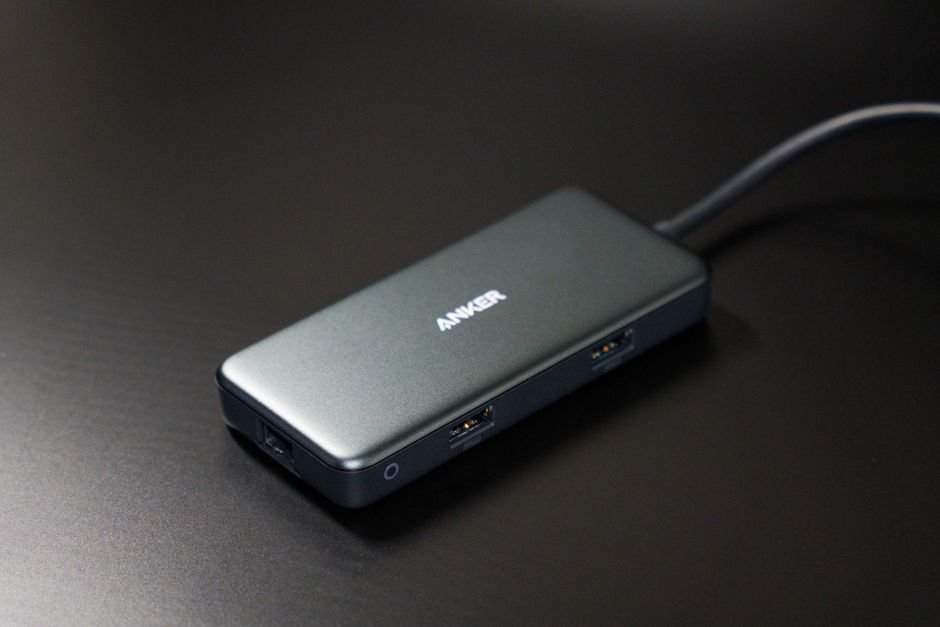
    The Anker 555 is a powerhouse for those who need a reliable, multi-functional expansion. It features an impressive array of ports, including HDMI for 4K output, USB-A, USB-C data ports, and even an Ethernet port for stable internet. The build quality is exceptionally sturdy, featuring a heat-dissipating aluminum shell that stays cool even under heavy use. It provides excellent value for anyone needing to turn a single port into a full desktop workstation.

    Best for: All-rounders and mobile professionals.

    Pros

    • Excellent port variety including Ethernet
    • Reliable Power Delivery support
    • High-quality aluminum construction

    Cons

    • Cable is slightly short for some setups
    • Can get warm during heavy data transfers

    Satechi Multi-Port Adapter

    Satechi has mastered the art of the premium accessory. This adapter is a standout for its seamless integration with macOS and iPadOS ecosystems. The build quality is top-tier, featuring a sleek, space-gray finish that matches modern laptops perfectly. It excels in data throughput, making it a dream for creators moving large 4K video files. While it carries a premium price tag, the stability and speed it offers are unmatched in its class.

    Best for: Creative professionals and Apple enthusiasts.

    Pros

    • Premium, aesthetic design
    • High-speed SD/MicroSD card readers
    • Very stable connection

    Cons

    • More expensive than competitors
    • Fewer legacy ports than Anker

    UGREEN Revodok Pro

    If you are looking for the most cost-effective way to expand your connectivity, the UGREEN Revodok Pro is a fantastic contender. Despite its lower price point, it does not skimp on the essentials, offering USB-C and USB-A ports with surprisingly fast data speeds. The build is compact and lightweight, making it an ideal companion for travelers. It is a “no-frills” solution that performs exactly as advertised without breaking the bank.

    Best for: Budget shoppers and students.

    Pros

    • Extremely affordable
    • Compact and highly portable
    • Plug-and-play simplicity

    Cons

    • Lacks advanced features like Ethernet
    • Plastic-heavy construction in some models

    CalDigit TS4 Thunderbolt 4 Dock

    The CalDigit TS4 is in a league of its own, moving beyond a simple “hub” into the realm of a professional docking station. This is a massive, high-performance device designed for permanent desktop setups. With 18 ports, including Thunderbolt 4, DisplayPort, and high-speed 2.5GbE Ethernet, it can power your entire ecosystem. It is an investment, but for users running multiple monitors and high-speed RAID arrays, it is the gold standard of connectivity.

    Best for: Power users and professional desktop workstations.

    Pros

    • Unmatched port density
    • Supports multiple 4K/8K displays
    • Massive power delivery for laptops

    Cons

    • Very expensive
    • Large footprint (not portable)

    How We Picked

    To determine the best USB-C hubs, our team followed a rigorous testing process. We didn’t just look at the spec sheet; we tested each device in real-world scenarios. Our evaluation criteria included:

    • Data Integrity: We performed large file transfers (50GB+) to ensure no packet loss or connection drops occurred.
    • Thermal Management: We monitored how much each hub heated up during simultaneous use of HDMI, Power Delivery, and USB data ports.
    • Power Delivery (PD) Stability: We verified that the hubs could pass through enough wattage to charge a laptop without interrupting data transfers.
    • Port Versatility: We prioritized hubs that offered a balanced mix of modern (USB-C) and legacy (USB-A/SD) ports.
    • Build Durability: We assessed the materials used, looking for aluminum housings that offer better heat dissipation and longevity.

    Frequently Asked Questions

    Do I need a Thunderbolt hub or just a USB-C hub?

    If you only need to connect mice, keyboards, and a single monitor, a standard USB-C hub is sufficient. However, if you need to run multiple high-resolution monitors, high-speed external storage, and require massive data bandwidth, a Thunderbolt hub is necessary.

    Will a USB-C hub slow down my data transfer speeds?

    It can, if the hub is poorly designed. Cheap hubs often share bandwidth across all ports. When you plug in multiple devices, the speed per port decreases. High-quality hubs, like those we reviewed, use better controllers to manage bandwidth more efficiently.

    Can I charge my laptop through the hub?

    Most modern hubs support “Pass-Through Charging” via Power Delivery (PD). However, you must ensure your wall charger has enough wattage to power both the hub itself and your laptop simultaneously. We recommend using at least a 65W or 100W charger for best results.

    Where to Buy / Best Deals

    Finding the best deals on these essential accessories can save you a significant amount of money. Here is our current recommendation for purchasing:

    • Anker 555 USB-C Hub: Currently available at a great discount on Amazon. Look for “Bundle and Save” options if you are buying multiple Anker accessories.
    • Satechi Multi-Port Adapter: Best purchased directly from Satechi’s website or B&H Photo for the most reliable warranty support.
    • UGREEN Revodok Pro: The best deals are typically found on UGREEN’s official store or during seasonal sales on Amazon.
    • CalDigit TS4: Due to its high price, we recommend checking specialized tech retailers like Newegg or B&H, where you can often find refurbished units or seasonal discounts.

    Conclusion

    After an extensive USB-C hubs review, the winner for the best overall USB-C hub is the Anker 555. It offers the most balanced combination of port variety, thermal performance, and price. While the CalDigit TS4 is the king of performance and the Satechi is the king of aesthetics, the Anker 555 is the most practical choice for the vast majority of users. Whether you are working from a cafe or a home office, this hub ensures you stay connected without the headache of constant adapter swapping.

  • How To Create And Sell Puzzle Books On Amazon

    How To Create And Sell Puzzle Books On Amazon

    You know that feeling when you finish a difficult Sudoku or a word search and feel a tiny burst of accomplishment? Now, imagine getting paid by people all over the world to provide those little moments of satisfaction. Selling puzzle books on Amazon KDP (Kindle Direct Publishing) isn’t about being a genius mathematician or a master linguist. It is about understanding a specific niche, creating high-quality content, and letting Amazon handle the printing, shipping, and customer service.

    I remember sitting at my desk wondering if this was actually a viable business or just another internet myth. After spending months testing different niches, I realized the real secret isn’t just making puzzles; it’s about making puzzles for a specific person. Whether it’s “Large Print Sudoku for Seniors” or “Spooky Themed Word Searches for Teens,” the money is in the details.

    The Low-Barrier Entry: Understanding the Business Model

    Amazon KDP is a print-on-demand service. This means you don’t need a warehouse full of books or a massive upfront investment. When a customer clicks “buy,” Amazon prints the book, ships it, and sends you a royalty. This significantly lowers your startup cost compared to traditional retail ventures.

    Let’s talk numbers. If you are comparing this vs traditional job, the math looks a bit different. You won’t get a steady paycheck every Friday, but you are building an asset that can earn money while you sleep. A beginner might see anywhere from $50 to $500 in monthly royalties once they have a small library of 10-20 high-quality books. Once you scale to 100+ books, some creators report monthly earnings in the thousands, though that requires significant time and research.

    What you will need to get started

    • A computer with internet access.
    • A niche research tool (like Helium 10 or Publisher Rocket).
    • Puzzle creation software (like Puzzle Wiz or Book Bolt).
    • none

    • A Canva account for cover design.
    • A small budget for advertising (optional but recommended).

    Step 1: Finding Your Profitable Niche

    Most people fail because they create a “General Puzzle Book.” If you search Amazon for “Puzzle Book,” you will see millions of results. You cannot compete with the giants who have been doing this for years. Instead, you need to find a “micro-niche.”

    Look for intersections. Instead of just “Word Search,” think “Word Search for Ocean Lovers” or “Cryptograms for History Buffs.” Use the Amazon search bar to see what people are actually typing. If you see auto-complete suggestions like “Sudoku for beginners with large print,” you’ve found a potential goldmine. The goal is to find a topic with high demand but low, high-quality competition.

    How to validate your idea

    Before you spend even an hour making a puzzle, check the BSR (Best Sellers Rank) of similar books on Amazon. If the top books in your niche have a BSR under 200,000, there is enough active movement to suggest a healthy demand. If the BSRs are in the millions, the niche is likely too dead to bother with.

    Step 2: Creating the Interior Content

    You don’t need to manually draw every grid. There are several tools designed specifically for this. Book Bolt is a favorite among many because it handles both the puzzle generation and the layout design in one platform. If you prefer a more manual, artistic approach, you can use Canva to layout your pages, though you’ll need to source your puzzles from elsewhere.

    Quality control is vital here. There is nothing a customer hates more than a word search where the words don’t actually exist in the grid, or a Sudoku with an error. Always, always, always test your puzzles yourself before uploading them. A single bad review about a broken puzzle can kill your book’s momentum instantly.

    Time investment vs. Complexity

    A simple word search book might take you 10 to 15 hours to research, create, and format. A complex logic puzzle book might take 40 hours or more. While the complex book takes longer, it often has a higher ROI because it is harder for competitors to replicate your work.

    Step 3: Designing a Clickable Cover

    On Amazon, people absolutely do judge a book by its cover. Your cover is your primary marketing tool. It needs to look professional, clearly communicate what is inside, and stand out in a sea of thumbnails. If your cover looks like it was made in MS Paint, customers will skip right over it.

    Use Canva to create your cover. Focus on high-contrast colors and legible fonts. If your book is for seniors, make sure the title is massive and easy to read. Avoid cluttered designs; sometimes a clean, bold aesthetic performs much better than a busy, colorful one.

    Step 4: Uploading and Optimization

    The final step is the technical part: uploading to KDP. This is where your SEO (Search Engine Optimization) happens. You will be asked for a title, subtitle, and seven backend keywords. Do not just repeat your title in your keywords. Instead, use those seven slots to capture different search terms.

    If your title is “Ocean Word Search,” your keywords should include terms like “sea life activity book,” “gifts for marine biologists,” or “large print relaxation puzzles.” This helps Amazon’s algorithm understand exactly who should see your book in their search results.

    Common pitfalls to avoid

    • Keyword Stuffing: Don’t make your title a long string of random words. It looks spammy and Amazon can reject it.
    • Ignoring the Spine: If your book is thin, don’t try to put text on the spine. It will likely end up off-center and look unprofessional.
    • Ignoring Margins: Ensure your puzzles aren’t too close to the “gutter” (the middle crease). If they are, customers won’t be able to read them easily.

    Is it worth the effort?

    Building a puzzle book empire is a marathon, not a sprint. You won’t get rich overnight, and your first three books might not sell a single copy. However, the beauty of this model is that every book you publish is a new “employee” working for you 24/7. Over time, as your library grows, you create a compounding effect of passive income.

    If you are looking for a way to supplement your income without the massive overhead of a physical store, this is one of the most accessible paths available. The cost is low, the risk is minimal, and the ceiling for growth is entirely up to you.

    Ready to start your first book? Pick a niche you are interested in today, grab a tool like Book Bolt, and commit to finishing just one interior. The hardest part is simply starting.

  • Best Noise Canceling Headphones in 2026

    Best Noise Canceling Headphones in 2026

    In an increasingly loud world, finding a moment of silence can feel like a luxury. Whether you are trying to focus in a bustling open-plan office, block out the engine drone on a long-haul flight, or simply enjoy a podcast without the interference of city traffic, the right pair of headphones can be a life-changer. However, with so many options hitting the market, deciding which noise canceling headphones to buy can feel overwhelming. The technology has advanced significantly, moving beyond simple passive isolation to sophisticated active noise cancellation (ANC) that uses internal microphones to neutralize external frequencies.

    When shopping for the best noise canceling headphones, you shouldn’t just look at the price tag. You need to consider several critical factors: the strength of the ANC algorithm, the frequency response (sound quality), battery life, comfort for long-term wear, and the quality of the microphone for calls. A pair of headphones that sounds incredible but pinches your ears after twenty minutes isn’t a good investment for a frequent traveler.

    This comprehensive noise canceling headphones review is designed for audiophiles, commuters, students, and remote workers alike. We have analyzed the top contenders in the industry to help you handle the complex landscape of audio technology. In this guide, we will break down the performance, build quality, and value of the top noise canceling headphones 2026 to ensure you find the perfect companion for your daily grind.

    Product Price Best For Rating
    Sony WH-1000XM5 $399 All-around Performance 4.9/5
    Bose QuietComfort Ultra $429 Maximum Silence 4.8/5
    Apple AirPods Max $549 Apple Ecosystem Users 4.6/5
    Sennheiser Momentum 4 $379 Audiophiles 4.7/5
    Soundcore Q35 $109 Budget Shoppers 4.2/5

    Sony WH-1000XM5: The King of Versatility

    Sony WH-1000XM5 Review

    The Sony WH-1000XM5 continues to set the gold standard for what a flagship wireless headphone should be. Featuring an unprecedented number of microphones and a dual-processor architecture, the ANC is incredibly adept at neutralizing high-frequency sounds like human voices. The build quality is sleek and modern, though it lacks the folding mechanism of its predecessor. Sound-wise, it offers a rich, warm profile that is highly customizable via the Sony Headphones Connect app. It is a powerhouse of features, including excellent multipoint Bluetooth connectivity and industry-leading call quality.

    Best for: All-around performance and commuters.

    Pros

    • Unmatched noise cancellation depth
    • Exceptional microphone quality for calls
    • Smart features like “Speak-to-Chat”

    Cons

    • Does not fold as compactly as older models
    • Premium price point

    Bose QuietComfort Ultra: The Silence Specialist

    Bose QuietComfort Ultra Review

    If your primary goal is to disappear into a bubble of silence, the Bose QuietComfort Ultra is the undisputed champion. Bose has mastered the art of “Immersive Audio,” which creates a wider, more spatial soundstage that makes music feel like it’s happening in front of you rather than inside your head. The comfort levels are legendary, with soft ear cushions that distribute pressure evenly across the head. While the battery life is slightly behind some competitors, the sheer effectiveness of the ANC in blocking out low-frequency engine drones is unmatched. It remains a top-tier choice for those who prioritize peace and quiet above all else.

    Best for: Frequent flyers and those needing maximum isolation.

    Pros

    • World-class ANC performance
    • Extremely comfortable for long sessions
    • New Immersive Audio mode

    Cons

    • High price tag
    • Battery life is average compared to competitors

    Apple AirPods Max: The Luxury Ecosystem Choice

    Apple AirPods Max Review

    The Apple AirPods Max is a masterclass in industrial design, utilizing premium materials like knit mesh and anodized aluminum. While many competitors rely on plastic, the AirPods Max feels like a luxury accessory, though this adds significant weight. The integration with the Apple ecosystem is seamless, allowing for instant switching between iPhone, iPad, and Mac. The computational audio processing provides a highly polished listening experience with excellent transparency mode. However, the lack of a power button and the expensive “Smart Case” are points of contention for some users.

    Best for: Heavy users within the Apple ecosystem.

    Pros

    • Stunning premium build quality
    • Best-in-class Transparency Mode
    • Seamless Apple device integration

    Cons

    • Very expensive
    • Heavy and less portable

    Sennheiser Momentum 4: The Audiophile’s Choice

    Sennheiser Momentum 4 Review

    For those who refuse to compromise on high-fidelity audio, the Sennheiser Momentum 4 is the standout performer. Unlike many ANC headphones that prioritize noise reduction at the expense of audio clarity, Sennheiser maintains a wide, detailed, and accurate soundstage. The battery life is the true star here, boasting an incredible 60 hours of playback on a single charge, which dwarfs almost every other flagship on this list. The design is understated and professional, making it suitable for both office environments and casual listening. It provides a sophisticated balance of smart features and pure sonic excellence.

    ly

    Best for: Audiophiles and long-distance travelers.

    Pros

    • Incredible 60-hour battery life
    • Superior sound fidelity and detail
    • Very comfortable for long-term wear

    Cons

    • ANC is not quite as strong as Sony or Bose
    • Touch controls can be sensitive

    Soundcore Q35: The Budget Champion

    Soundcore Q35 Review

    You don’t need to spend $400 to get a decent noise-canceling experience. The Soundcore Q35 offers impressive value for budget-conscious shoppers. While the ANC isn’t capable of blocking out a jet engine, it is remarkably effective at dampening ambient office chatter and low-level hums. The build is primarily plastic, which makes them lightweight and durable for daily use. The sound profile is bass-heavy, which many users enjoy, and the battery life is surprisingly robust for the price. It is a fantastic entry-level option for students or anyone looking for a secondary pair of headphones.

    Best for: Budget shoppers and students.

    Pros

    • Extremely affordable
    • Great battery life for the price
    • Decent ANC for low-frequency noise

    Cons

    • Build quality feels less premium
    • ANC struggles with high-frequency sounds

    Sony WH-1000XM5 vs. Bose QuietComfort Ultra: Which Is Better?

    This is the ultimate showdown for anyone looking for the best noise canceling headphones. When comparing the Sony WH-1000XM5 and the Bose QuietComfort Ultra, the decision comes down to your specific needs. The Sony XM5 wins on “intelligence”—its ability to adjust ANC levels based on your environment and its superior microphone array for calls makes it a better tool for the modern professional. However, if your primary goal is total isolation, the Bose QC Ultra takes the lead. The Bose ANC is slightly more aggressive in neutralizing a wider spectrum of noise, and its Immersive Audio feature provides a more spatial experience that Sony’s standard stereo cannot quite match.

    How We Picked

    Our selection process for this noise canceling headphones review was rigorous. We evaluated each product based on four primary pillars:

    1. ANC Effectiveness: We tested how well each pair attenuated low-frequency (engines) and high-frequency (voices) sounds.

    2. Audio Fidelity: We analyzed frequency response, soundstage width, and clarity across different genres of music.

    3. Ergonomics and Comfort: We tested long-term wearability, clamping force, and heat buildup during extended use.

    4. Feature Set and Value: We looked at battery life, app support, multipoint connectivity, and whether the price justified the performance.

    Frequently Asked Questions

    Does noise canceling headphones work for all sounds?

    Not all. ANC is most effective at neutralizing constant, low-frequency sounds like airplane engines or air conditioners. Sudden, high-frequency sounds like a person shouting or a dog barking are much harder for the technology to cancel out instantly.

    Are noise canceling headphones safe for sleeping?

    Generally, yes, but be cautious. While they can help block out snoring, the pressure from some ANC algorithms can be noticeable. We recommend using “sleep-specific” headphones if you plan to wear them for entire nights.

    How long does battery life typically last on ANC headphones?

    Most flagship models today offer between 30 and 40 hours of playback with ANC turned on. Budget models may offer less, while the Sennheiser Momentum 4 leads the pack with up to 60 hours.

    Where to Buy / Best Deals

    To get the best value on these premium devices, we recommend checking major retailers during seasonal sales. Here are our current recommendations:

    • Sony WH-1000XM5: Look for deals on Amazon or Best Buy; they frequently go on sale for $329 during Prime Day or Black Friday.
    • Bose QuietComfort Ultra: Check Bose.com directly for occasional bundle deals that include carrying cases.
    • Apple AirPods Max: These rarely see deep discounts, but retailers like Target often have them $50 off during holiday windows.
    • Sennheiser Momentum 4: Great deals are often found on audio-specialty sites like Sweetwater.
    • Soundcore Q35: The best price is almost always found on Amazon; check for “clip-on” coupons on the product page.

    Conclusion

    Choosing between the top noise canceling headphones 2026 depends entirely on your lifestyle. If you want the absolute best all-rounder with incredible features, the Sony WH-1000XM5 is our top overall pick. However, if you are a frequent flyer seeking total silence, go with the Bose. For the audiophile on a budget, the Soundcore Q35 provides incredible bang for your buck. No matter which you choose, investing in high-quality ANC is an investment in your focus and peace of mind.

  • Print On Demand Mug Designs That Actually Sell

    Print On Demand Mug Designs That Actually Sell

    Let’s be honest: if you’ve spent more than five minutes browsing Etsy or Amazon, you’ve seen a thousand “Live, Laugh, Love” mugs. They are everywhere, and frankly, most of them are clutter. If you are looking to start a print on demand (POD) business, you might be tempted to just throw random quotes onto a white ceramic cup and hope for the best. But hope is not a business strategy.

    The truth is that selling mugs is a volume game, but winning that game requires a specific type of design thinking. You aren’t just selling a vessel for caffeine; you are selling an identity, a joke, or a way for someone to show off their hobby. To make this work, you need to move away from generic decor and move toward hyper-specific niches. This guide will break down exactly how to find those profitable design pockets without wasting months on stuff nobody wants to buy.

    Finding Your Profitable Niche

    The biggest mistake beginners make is trying to appeal to everyone. When you design for “everyone,” you end up designing for no one. The secret to a high ROI in POD is finding a community that is passionate, slightly obsessed, and loves to express themselves through merchandise.

    Think about groups that have high engagement and clear identifiers. These might include:

    • Specific professions (Radiology techs, software engineers, paralegals).
    • Niche hobbies (Beekeeping, sourdough baking, vintage typewriter collecting).
    • Pet owners (Not just “dog lovers,” but specifically “Bernese Mountain Dog Moms”).
    • Hyper-local interests or specific academic majors.

    When you narrow your focus, your marketing becomes much easier. It is much simpler to target “Sarcastic History Teachers” than it is to target “People who like mugs.”

    How to Validate a Design Idea

    Before you spend hours in Canva or Adobe Illustrator, you need to check if there is actually demand. You don’t want to fall in love with a design that has zero search volume. A great way to do this is by using tools like Erank or Marmalead if you are focusing on Etsy, or simply looking at the Amazon Best Sellers list.

    Look for “low competition, high demand” opportunities. If you search for “Nurse Mug” and see 500,000 results, you’ve already lost. If you search for “Night Shift Oncology Nurse Mug” and see 500 results, you’ve found a goldmine. The goal is to find a gap where people are searching for something specific but the current options are either ugly or non-existent.

    Design Styles That Move Product

    You don’t need to be a master painter to succeed in POD. In fact, some of the highest-selling mugs use very basic typography. However, the layout and font choice matter immensely. Here are three styles that consistently perform well in the marketplace.

    Minimalist Typography

    Clean, sans-serif fonts or elegant scripts are incredibly popular because they look “aesthetic” on a desk. This style works best for quotes that are witty, dry, or deeply relatable. The focus here is on the words, not the graphics. If the text is clever enough, a simple black font on a white mug is all you need.

    Retro and Groovy Aesthetics

    The 70s revival is still going strong. Think wavy text, muted earth tones (mustard yellow, burnt orange, sage green), and “distressed” textures. This style works perfectly for hobby-based niches like gardening or camping. It gives the product a vintage, high-end feel that justifies a slightly higher price point.

    Illustrative and Icon-Based Designs

    If you have a bit more graphic design skill, adding small, cute icons can elevate a design. A simple line-art drawing of a coffee bean, a tiny stethoscope, or a minimalist cat silhouette can turn a boring text mug into a piece of art. Using tools like Kittl or even Canva’s element library can help you piece these together without needing a degree in fine arts.

    The Real Numbers: Costs and Expectations

    When comparing a POD side hustle vs traditional job scenarios, you have to look at the upfront investment and the time commitment. Unlike a 9-to-5, there is no guaranteed hourly wage, but the scalability is much higher.

    The Startup Cost:
    One of the best parts about POD is that the startup cost is incredibly low. You don’t need to hold inventory. Your primary expenses will be:

    • Design software (Canva Pro or Adobe Creative Cloud): $12 – $55/month.
    • E-commerce platform fees (Etsy listing fees or Shopify monthly subscription): $0.20 per listing or ~$39/month.
    • Research tools (Erank or Helium 10): $10 – $50/month.

    Total initial investment can be as low as $20-$50 to get your first few designs live.

    Time Investment:
    Expect to spend significant time in the “research and upload” phase. A realistic expectation is spending 2-4 hours per design once you factor in niche research, designing, creating mockups, and writing SEO-friendly titles and tags. You won’t see massive profits in week one; this is a slow-burn business that rewards consistency.

    Potential Income:
    This is highly variable. Some creators make an extra $200 a month covering their groceries, while others running large-scale shops earn thousands. A realistic range for a dedicated beginner after 6 months of consistent uploading is anywhere from $100 to $1,000 in monthly profit.

    Scaling Your Success

    Once you find a design that gets its first few sales, don’t stop there. This is your signal to “double down.” If a specific “Funny Chemist” mug sells, create a “Funny Biologist” version, a “Funny Lab Tech” version, and so on. This is how you build a cohesive brand rather than just a random collection of files.

    Don’t forget about mockups. Using high-quality, lifestyle mockups from places like Placeit can make your product look like it was photographed in a professional studio. People buy with their eyes, and a mug sitting on a plain white background is much less enticing than a mug held by someone sitting in a cozy, sunlit kitchen.

    Ready to start your journey? Pick one niche today, spend an hour researching what’s missing, and create your first design. The hardest part isn’t the design—it’s the decision to actually start.