Tag: Puzzle Books

  • How To Create And Sell Puzzle Books On Amazon

    How To Create And Sell Puzzle Books On Amazon


    Have you ever sat down with a Sudoku book or a word search pad and thought, “I could probably make something like this”? It sounds like a massive undertaking, but the truth is that a huge portion of the books you see on Amazon are created by individuals working from their kitchen tables. This is the world of KDP (Kindle Direct Publishing), and it is one of the most accessible ways to start a low-content publishing business.

    Puzzle Books

    Unlike writing a 300-page novel, creating puzzle books focuses on utility rather than prose. You aren’t worrying about character arcs or plot holes; you are focusing on logic, patterns, and user experience. If you have a knack for organization and a bit of patience, you can build a library of digital assets that generate passive income while you sleep.

    The low-barrier entry of Amazon KDP

    Amazon KDP is a print-on-demand service. This means you upload your PDF, and Amazon handles the printing, shipping, and customer service. When someone buys your book, Amazon prints a copy, takes their cut of the sale, and sends you a royalty. This setup is incredibly beginner friendly because you don’t need to hold any inventory or rent a warehouse.

    Let’s talk numbers. Your initial startup cost can be as low as zero dollars if you use free tools. However, if you want to speed up the process, you might spend anywhere from $50 to $200 on software subscriptions or professional cover design. Most people see a realistic ROI after their first 5 to 10 books find their audience, though some months might be slower than others.

    Estimating your time and earnings

    Creating a single high-quality puzzle book—say, a 100-page Sudoku collection—might take you anywhere from 5 to 15 hours depending on your workflow. This includes researching niches, generating the puzzles, formatting the interior, and designing the cover. Once the book is live, the maintenance time is nearly zero.

    Income varies wildly. Some creators make an extra $50 a month from a small hobbyist collection, while more dedicated publishers managing hundreds of titles can earn $2,000 to $5,000+ per month. It is rarely a “get rich quick” scheme; it is more of a slow-build asset business.

    Choosing your puzzle niche

    The biggest mistake new publishers make is trying to sell a “General Puzzle Book.” If you compete against the giants, you will lose. You need to find a specific corner of the market where people are searching but not finding enough high-quality options.

    Instead of “Word Search,” think about these specific angles:

    • Word Search for Seniors (with large print for easy reading)
    • Cryptograms for 1980s Movie Lovers
    • Sudoku for Kids Ages 6-8
    • Logic Puzzles for Commuters

    Use tools like Amazon’s search bar or Helium 10 to see what people are actually typing into the search box. If you see a lot of search results but the existing books have terrible covers or bad reviews, you have found a gap in the market.

    The toolkit for puzzle creation

    You don’t need to be a mathematician to create puzzles. There are several specialized tools that do the heavy lifting for you. Here is a breakdown of what you might need:

    Puzzle Generation Software

    Software like Puzzle Wiz or Book Bolt allows you to generate hundreds of puzzles in minutes. These platforms are great because they ensure your puzzles are mathematically sound and formatted correctly for printing. If you are on a budget, you can even find Python scripts or simpler generators online that output CSV or image files.

    Design and Formatting

    Your interior needs to be a clean PDF. Canva is a fantastic, free-to-start option for designing your book covers and even arranging your puzzle pages. For more advanced layouts, Adobe InDesign is the industry standard, but it comes with a steeper learning curve and a monthly fee.

    Research Tools

    To find out which keywords are profitable, consider using Publisher Rocket. It helps you see the estimated monthly revenue of specific keywords and how much competition you’ll face. It is a paid tool, but it can save you dozens of hours of wasted effort on books that no one is looking for.

    Step-by-step workflow

    Follow this sequence to avoid getting overwhelmed by the process:

    1. Market Research: Identify a niche with high demand and low-to-medium competition.
    2. able

    3. Content Generation: Use your chosen software to create a set of unique, high-quality puzzles.
    4. Interior Formatting: Arrange the puzzles in a PDF. Ensure you include a “Solutions” section at the back of the book.
    5. Cover Design: Create a bright, readable cover that clearly communicates what is inside.
    6. Upload to KDP: Upload your files, choose your keywords, and set your price.
    7. Optimization: Once live, monitor your sales and adjust your keywords if the book isn’t getting traction.

    Common pitfalls to avoid

    One of the most frequent errors is “keyword stuffing” in your title. Amazon has strict rules about this. Don’t name your book “Sudoku Word Search Puzzle Book for Kids Fun Activity Book.” This looks like spam and can get your account flagged. Keep your title descriptive and your subtitle informative.

    Another issue is quality control. Always print a test copy of your book using the “Print Preview” feature on KDP. You would be surprised how often margins are too small, causing parts of the puzzle to be cut off during the printing process. A book with cut-off content will result in 1-star reviews, which is a death sentence for a new author.

    Finally, don’t ignore the importance of the “Look Inside” feature. Amazon allows customers to preview the first few pages. If your interior looks messy or unprofessional, they will click away. Treat your interior design with the same respect as your cover design.

    If you are ready to stop consuming content and start creating it, pick one niche today and start researching. The best way to learn is by doing. Start small, learn the tools, and slowly build your library one book at a time.

    Our Top Picks

    Products we recommend:

    1. Amazon Self Publisher: How to Sell More Books on Amazon

    Amazon Self Publisher: How to Sell More Books on Amazon

    Amazon Self Publisher: How to Sell More Books on Amazon

    by Audiobooks.com

    $24.99

    Check Price →

    2. iPhone Millionaire: How to Create and Sell Cuttin

    iPhone Millionaire:  How to Create and Sell Cuttin

    iPhone Millionaire: How to Create and Sell Cuttin

    by eCampus.com

    $19.80

    Check Price →

    3. How to Sell on Amazon and Product Research: Product Research Tips and Practical Guide on How to Find a Winning Product to Sell on Amazon Fba –

    How to Sell on Amazon and Product Research: Product Research Tips and Practical Guide on How to Find a Winning Product to Sell on Amazon Fba -

    How to Sell on Amazon and Product Research: Product Research Tips and Practical Guide on How to Find a Winning Product to Sell on Amazon Fba –

    by Chirp Books

    $5.99

    Check Price →

  • Best Niches For Kdp Puzzle Books In 2026

    Best Niches For Kdp Puzzle Books In 2026

    If you have been scrolling through YouTube or TikTok lately, you have likely seen someone claiming they made thousands of dollars last month just by uploading simple word searches to Amazon. It sounds incredibly tempting, especially when you compare the low barrier to entry vs traditional job stability. But as we look toward 2026, the landscape of Kindle Direct Publishing (KDP) is changing. The days of uploading generic, low-effort puzzles and expecting a windfall are largely over. To make this work now, you need to stop thinking like a casual hobbyist and start thinking like a niche researcher.

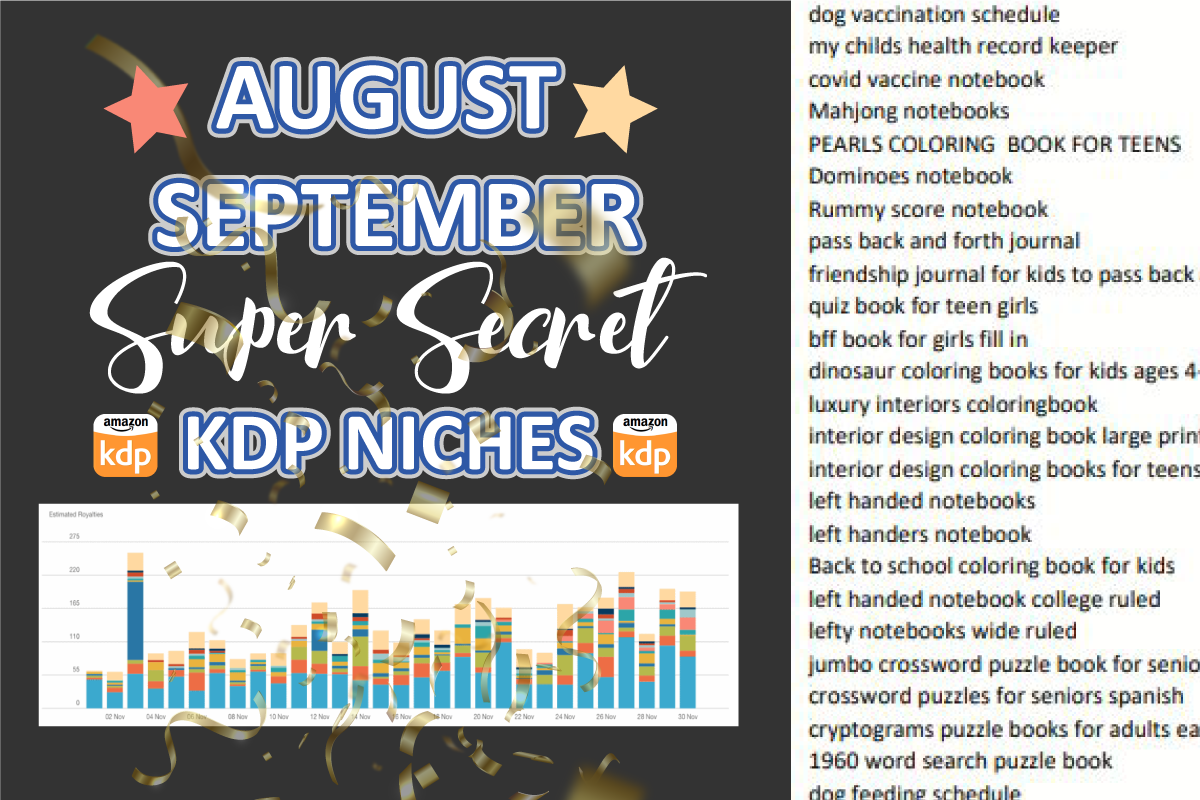
    August September Secret Kdp Niches by Elimesherstudio | Creative Market

    The good news is that the demand for tactile, screen-free entertainment is actually growing. People are feeling “digital fatigue,” and physical puzzle books offer a much-needed break from blue light. If you can find the right intersection of a hungry audience and low competition, you can build a sustainable side income. Let’s look at the specific niches that are projected to thrive in 2026.

    The Rise of Hyper-Specific Demographic Puzzles

    Generic “Sudoku for Adults” is a graveyard of failed publishing attempts. The competition is too high, and the margins are razor-thin. Instead, the real money in 2026 lies in “micro-niches”—books designed for a very specific person with a very specific interest.

    Neurodivergent-Friendly Activity Books

    There is a massive, underserved market for puzzle books designed specifically for individuals with ADHD or Autism. These aren’t just standard puzzles; they are books that incorporate sensory-friendly layouts, dopamine-friendly reward systems (like progress trackers), and varying difficulty levels to prevent overwhelm. Creating these requires more care in design, but the loyalty of this customer base is incredibly high.

    The “Silver Gamer” Market

    As the population ages, the demand for cognitive stimulation books for seniors is skyrocketing. However, don”t just make “large print” books. Think about themes that resonate with this demographic—nostalgic 1950s trivia, classic cinema crosswords, or gardening-themed word searches. These readers are often willing to pay a premium for high-quality, easy-to-read paper and clear instructions.

    Niche Ideas Based on Emerging Lifestyle Trends

    Predicting trends is part of the fun. By 2026, we expect certain lifestyle shifts to dictate what people buy during their downtime.

    • Eco-Conscious Living: Puzzle books centered around sustainability, composting, zero-waste lifestyles, and urban gardening.
    • Solo Travel Companions: Small-format, pocket-sized puzzle books designed specifically for long train rides, flights, or camping trips.
    • Mindfulness and Slow Living: Books that combine simple logic puzzles with coloring elements or journaling prompts to encourage a “slow” way of life.

    How much can you earn from these niches?

    This is the question everyone asks. Let’s be realistic. If you are running a single-book operation, you might make $20 to $50 a month. However, if you build a library of 50 to 100 high-quality, niche-specific books, a monthly income of $500 to $2,000 is a very achievable goal. It is not a “get rich quick” scheme, but rather a long-term asset-building strategy.

    The Logistics: Costs, Time, and Tools

    Starting this journey is quite beginner friendly, provided you don’t try to do everything manually. You don’t need a degree in graphic design, but you do need a systematic approach.

    Startup Costs

    One of the best parts about KDP is that you don’t need to hold inventory. Your primary costs will be:

    1. Software Subscriptions: Canva Pro (approx. $12/month) or Adobe Creative Cloud (approx. $55/month) for high-quality layouts.
    2. Puzzle Generation Tools: Tools like Puzzle Wiz or Book Bolt are essential for creating professional-grade grids without spending hours on manual entry.
    3. Research Tools: A subscription to Helium 10 or Publisher Rocket (approx. $10-$50/month) to find low-competition keywords.

    Total initial investment: Under $100.

    Time Investment

    Expect to spend about 5 to 10 hours per book if you are doing it correctly. This includes keyword research, puzzle generation, interior formatting, and designing a cover that actually stands out. If you try to rush this in 1 hour, your reviews will reflect that, and Amazon’s algorithm will stop showing your book to customers.

    Building a Sustainable Workflow

    To avoid burnout, you need a repeatable process. Don’t just jump from one idea to the next. Pick a “sub-niche” (for example, “Vintage Botanical Crosswords”) and create a series. This allows you to reuse your research and build brand recognition. When a customer loves your “Vintage Botanical” book, they are much more likely to click on your “Vintage Floral” Sudoku book.

    Remember, the goal is to create a brand, not just a collection of random files. Use tools like Creative Fabrica to find unique, high-quality graphics that make your covers look professional and distinct from the thousands of generic templates circulating online.

    If you are ready to stop browsing and start building, the best time to start researching your first niche is today. Pick one theme, look at the data, and create something that actually provides value to a specific reader.

    Our Top Picks

    Products we recommend:

    1. 3000 Best Kdp Coloring Book Niches by Elimesherstudio | Creative Market

    3000 Best Kdp Coloring Book Niches by Elimesherstudio | Creative Market

    3000 Best Kdp Coloring Book Niches by Elimesherstudio | Creative Market

    by Creative Market

    $11.00

    Check Price →

    2. Best Of The Week Sunday Crosswords: New York Magazine Crossword Puzzle Books For Adults, Crossword Puzzle Books For Adults Large P

    Best Of The Week Sunday Crosswords: New York Magazine Crossword Puzzle Books For Adults, Crossword Puzzle Books For Adults Large P

    Best Of The Week Sunday Crosswords: New York Magazine Crossword Puzzle Books For Adults, Crossword Puzzle Books For Adults Large P

    by Indigo Books & Music

    $9.50

    Check Price →

    3. Best Books for Teens

    Best Books for Teens

    Best Books for Teens

    by BiggerBooks.com

    $171.33

    Check Price →

  • Best Niches For Kdp Puzzle Books In 2026

    Best Niches For Kdp Puzzle Books In 2026

    Let’s be honest: the “low-content” gold rush of 2018 is long gone. If you go onto Amazon today and search for “word search book,” you’ll see millions of results, most of them looking like they were made in five minutes by a bot. But here is the good news: the demand for high-quality, specialized puzzle books isn’t shrinking. In fact, as people look for ways to disconnect from screens, the hunger for tactile, “analog” entertainment is growing.

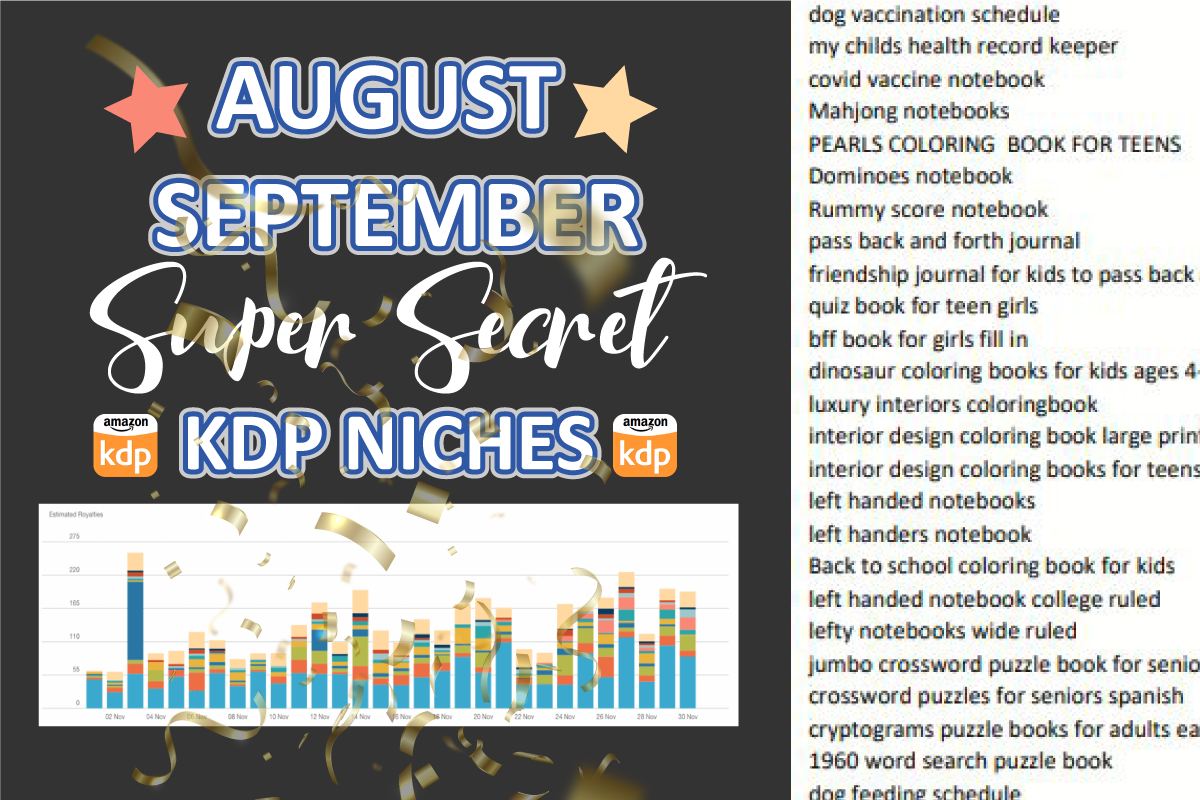
    August September Secret Kdp Niches by Elimesherstudio | Creative Market

    As we look toward 2026, the strategy for Kindle Direct Publishing (KDP) has shifted from quantity to specificity. You can no longer just throw a generic Sudoku book at the wall and hope it sticks. You need to find pockets of interest where competitors are lazy. If you are weighing this vs traditional job stability, you need to understand that success here depends on your ability to spot trends before they become saturated.

    Finding Your Edge in a Saturated Market

    The secret to surviving in KDP isn’t about finding a niche with zero competition—that niche probably has zero customers. Instead, you want to find “micro-niches.” These are specific sub-categories where enthusiasts are looking for something tailored to their unique hobbies, professions, or lifestyles. Instead of a “Brain Games Book,” think “Sudoku for Retired Nurses” or “Cryptograms for True Crime Fans.”

    < multiplier-logic>

    When you narrow your focus, your advertising costs drop because your keywords are much more precise. You aren’t bidding on expensive, broad terms; you are bidding on specific interests. This is how small creators compete with big publishing houses.

    Top Profitable Puzzle Niches for 2026

    Predicting the future is tricky, but based on current shifts in lifestyle and aging demographics, these three areas show massive potential for the next few years.

    1. The Neurodivergent & Cognitive Care Niche

    There is a massive, underserved market for puzzles designed specifically for neurodivergent brains (ADHD, Autism) or for seniors dealing with early-stage cognitive decline. These aren’t just standard puzzles; they require specific formatting. For example, larger fonts, higher contrast, and instructions that don’t overwhelm the reader. This is a high-value niche because the customers are incredibly loyal once they find a brand they trust.

    2. Hyper-Specific Hobbyist Crosswords

    People love to see their passions reflected in the content they consume. We are seeing a rise in “themed” puzzle books. Think about niches like:

    • Vintage Botany and Herbology
    • Urban Beekeeping and Permaculture
    • Retro 80s/90s Nostalgia
    • Specific breed enthusiast books (e.g., Golden Retriever lovers)

    These readers aren’t just buying a book; they are buying a way to celebrate their identity.

    3. The “Unplugged” Travel Companion

    As digital detox trends continue to grow, there is a huge opportunity for “Traveler’s Log Puzzles.” These are small-format, pocket-sized books designed specifically for long train rides, camping trips, or flight delays. The focus here is on portability and durability.

    The Financial Reality: What to Expect

    I don’t want to sugarcoat this. This isn’t a “get rich overnight” scheme. It is a real business that requires research and design skills. If you are wondering how much can you earn, the answer is highly variable. Some creators earn an extra $200 a month to cover groceries, while others running a library of 500+ high-quality books can see much higher figures.

    Let’s look at the numbers realistically:

    • Realistic Monthly Income: $50 to $2,000+ (depending on your catalog size and ad spend).
    • Startup Cost: $50 – $200. This covers your KDP account (free), a subscription to a design tool like Canva Pro or Adobe Creative Cloud, and perhaps a small budget for a specialized puzzle generator like Puzzle Wiz or Book Bolt.
    • Time Investment: 5 to 15 hours per book. This includes niche research, puzzle creation, formatting, and uploading.

    Breaking Down the Startup Cost

    You don’t need a massive budget to start. In fact, starting too big is a mistake. You can begin with just a laptop and a Canva subscription. The most significant “cost” is actually your time spent on keyword research. Using tools like Helium 10 or Publisher Rocket can give you an edge, but they come with monthly fees. If you are on a tight budget, start by manually analyzing Amazon’s “Auto-complete” feature to see what people are searching for.

    Essential Tools for Your 2026 Toolkit

    To compete in 2026, your books must look professional. If your interior looks like a messy Word document, you will get one-star reviews that kill your sales instantly. Here is what you should be using:

    1. Puzzle Generation: Tools like Book Bolt or specialized software for generating Sudoku, Word Search, and Mazes. This saves you dozens of hours of manual work.
    2. Graphic Design: Canva is the gold standard for beginners, but if you want to create truly unique covers that stand out, learning the basics of Adobe Illustrator or Affinity Designer is a massive advantage.
    3. Market Research: Publisher Rocket is the industry favorite for finding profitable keywords and seeing the estimated monthly revenue of competitors.

    Common Pitfalls to Avoid

    The biggest mistake I see new creators making is “niche jumping.” They create one book, it doesn’t sell in the first week, and they quit. KDP is a volume and testing game. You need to build a library. Another trap is ignoring the “Look Inside” feature. Amazon allows customers to preview your interior. If your puzzles are poorly formatted or the text is too small to read, you’ve lost the sale before they even hit the buy button.

    Lastly, don’t ignore the importance of quality over quantity. One incredible, well-researched book in a micro-niche will outperform fifty generic, low-effort word search books every single time.

    Ready to Start Your KDP Journey?

    The best time to start was a year ago; the second best time is today. Don’t wait until you have the “perfect” plan. Pick one small hobby you are interested in, research the competition, and try to create your first high-quality puzzle book. The learning process is where the real profit lies.

    If you found this helpful, subscribe to our newsletter for more deep dives into sustainable side hustles and digital publishing strategies.

    Our Top Picks

    Products we recommend:

    1. 3000 Best Kdp Coloring Book Niches by Elimesherstudio | Creative Market

    3000 Best Kdp Coloring Book Niches by Elimesherstudio | Creative Market

    3000 Best Kdp Coloring Book Niches by Elimesherstudio | Creative Market

    by Creative Market

    $11.00

    Check Price →

    2. Best Of The Week Sunday Crosswords: New York Magazine Crossword Puzzle Books For Adults, Crossword Puzzle Books For Adults Large P

    Best Of The Week Sunday Crosswords: New York Magazine Crossword Puzzle Books For Adults, Crossword Puzzle Books For Adults Large P

    Best Of The Week Sunday Crosswords: New York Magazine Crossword Puzzle Books For Adults, Crossword Puzzle Books For Adults Large P

    by Indigo Books & Music

    $9.50

    Check Price →

    3. Best Books for Teens

    Best Books for Teens

    Best Books for Teens

    by Knetbooks.com

    $155.93

    Check Price →